Alignment Method
Core alignment for the lowest splice loss on backbone and long-haul; cladding (V-groove) alignment for cost-effective FTTH and access work.

When two fibers have to become one — permanently, with almost no loss — the tool that does it is a fusion splicer. Through fusion splicing, it aligns two prepared fiber ends and fuses them with a precise electric arc, producing a joint so low in loss and reflection that it effectively disappears into the link.
For every long-haul span, FTTH drop, and data center trunk in fiber-optic communication, the fiber fusion splicer is where a permanent connection is made, and Aevumix is a fiber fusion splicer manufacturer with 30 years of experience building them for the crews who splice fiber every day.
The range covers both core-alignment splicers for the lowest-loss backbone and long-haul work and cladding-alignment (V-groove) splicers for cost-effective FTTH and access splicing — configurable and open to OEM and ODM supply.

No products in this category yet. Please check back soon or contact us for availability.
Explore related categories across industry, application, and performance attributes.
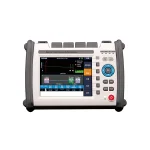 OTDR Tester Handheld, mini and smart OTDR testers that map every splice, connector, bend and break along a fiber by location and loss. Available for single mode, multimode and PON networks, with clear trace analysis and standard .sor reporting for fault location and link certification.
 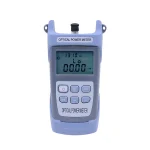 Optical Power Meter Calibrated optical power meters that measure link loss for fiber acceptance testing. Traceable accuracy across 850 to 1625nm, with PON-wavelength options for live networks. Available standalone or paired with a light source as a complete optical loss test set for two-ended certification.
 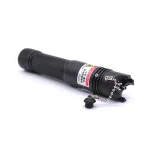 Visual Fault Locator Visual fault locator that flood a fiber with bright red laser light so breaks, tight bends and bad connectors glow visibly. The fastest way to locate a gross fault or verify continuity, working inside the OTDR dead zone, with 2.5mm, LC and MPO options and steady or pulsed output.
 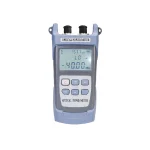 PON Tester Pass-through PON testers that read a live FTTH network without dropping subscribers. Measure downstream, upstream and video power on separate calibrated channels for GPON, EPON and 10G-PON, with pass/fail thresholds for fast turn-up and troubleshooting on working networks.
 How a Fusion Splicer Aligns Fiber
The single biggest decision in choosing a fiber fusion splicer is the alignment method, because it sets both splice loss and price. A core-alignment splicer uses cameras and motors to find and align the actual light-carrying cores of the two fibers before fusing — delivering the lowest splice loss, typically around 0.02 dB, which is what long-haul and backbone networks demand.
A cladding-alignment (V-groove) splicer aligns the outer cladding instead, which is simpler and more affordable, with slightly higher typical loss around 0.05 dB — perfectly suited to FTTH and access work where volume and cost matter more than the last hundredth of a dB.
Beyond alignment, the specs that decide daily productivity are splice time and heat-shrink time (how fast a crew turns splices), electrode life (how many splices before service), and field endurance — battery life, drop and dust sealing, and a bright screen.
Match the alignment method to the network and the cycle time to the workload, and the splicer stops being a bottleneck and becomes the fastest reliable step in the build.

OEM / ODM Programs
Because networks and budgets differ, we build to your market. As a fiber fusion splicer manufacturer and supplier, we configure the alignment method (core or cladding), the splice and heat programs for the fibers your customers run, the electrode and heater specification, and the battery and ruggedisation for field or bench duty.
The brand layer is complete. Housing colour and finish, boot logo and on-screen UI, firmware and splice-record export, and the carry case and accessory kit — cleaver, stripper, spare electrodes — all ship as your product.
Whether a buyer wants a lowest-loss core-alignment unit or a value FTTH cladding-alignment model, it arrives private-label from the factory, at wholesale pricing and a workable MOQ, with samples to prove splice quality before volume.

Need a Custom Fusion Splicer?
Tell us the network, the alignment method, and the cycle time and field conditions your customers work in. We will match it to a fiber fusion splicer built for your market and your brand.
NDA available · ISO-aligned production · English & technical support
Six factors decide whether a splicer earns a crew's trust. Use them to frame an OEM brief
Core alignment for the lowest splice loss on backbone and long-haul; cladding (V-groove) alignment for cost-effective FTTH and access work.
The headline spec — typically around 0.02 dB for core alignment, around 0.05 dB for cladding — that determines the joint's contribution to link loss.
Splice time and heat-shrink time set how fast a crew turns splices over a working day.
Splices per electrode set before replacement determines cost of ownership and service interval.
Battery life, drop and dust sealing, and a bright screen decide whether the splicer survives outside-plant duty.
The fiber types (single mode, multimode, drop cable) and protection sleeve sizes a unit handles set how much work it serves.
Share the network, alignment method, and field conditions your customers work in; we confirm the splicer configuration.
We set alignment, splice programs, and ruggedisation, then align OEM housing, firmware, and case to your brand.
Samples let you verify splice loss and cycle time on your own fiber before volume.
Stable manufacturing with consistent QC, flexible MOQs, and global logistics for ongoing supply.
Precise alignment and stable arc control produce low-loss, reliable joints — core alignment near 0.02 dB, cladding near 0.05 dB — that hold for the life of the link.
Housing, firmware, case, and packaging all ship under your brand — a private-label fusion splicer line, not a re-badged unit.
Lowest-loss core-alignment for backbone and value cladding-alignment for FTTH, from one manufacturer, so you serve both markets.
A real engineer, usually within a business day, for distributors and installers in 40+ countries.
It is the instrument that permanently joins two optical fibers by aligning their prepared ends and fusing them with a precise electric arc, creating a joint so low in loss and reflection that it effectively disappears into the link.
A core-alignment splicer aligns the actual fiber cores for the lowest splice loss (around 0.02 dB), suited to backbone and long-haul. A cladding-alignment (V-groove) splicer aligns the outer cladding — simpler and more affordable, with typical loss around 0.05 dB — ideal for FTTH and access. We make both.
Typically around 0.02 dB for core-alignment models and around 0.05 dB for cladding-alignment models on standard single mode fiber, depending on fiber and preparation quality.
Our splicers offer short splice times and fast heat-shrink cycles to keep field crews productive. Exact figures depend on the model and program; we publish them per unit.
Electrodes are rated in splices before replacement, which sets cost of ownership. We publish electrode life per model and supply spares as consumables.
Yes. Our cladding-alignment models are built for FTTH and access volume, and both types are ruggedised with battery life, sealing, and a bright screen for outside-plant conditions.
Fully. Alignment type, firmware, housing, case, and packaging all carry your brand, at low MOQs suited to launching a private-label line.
Tell us about your application and we will respond with material recommendations, sample options, and pricing as soon as possible.