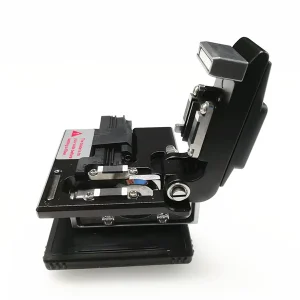
Fiber Cleavers
Angled Fiber Cleaver
Angled fiber cleavers that produce APC-angle end-faces for low-reflectance splices and connectors. Request a quote.

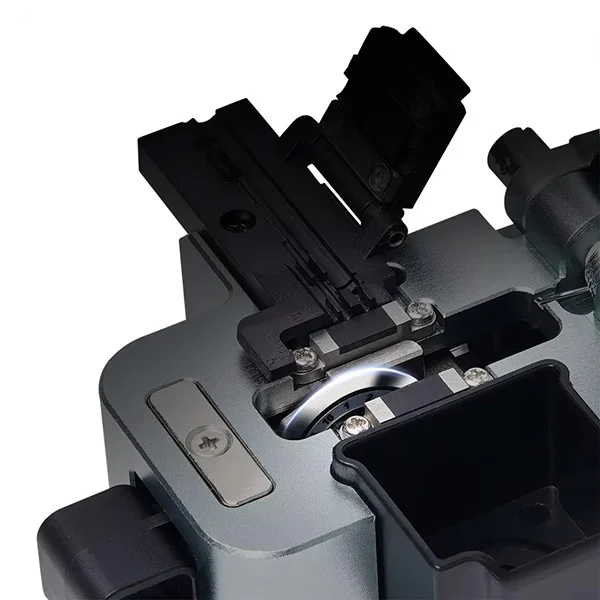
The cleave is the moment a fiber termination succeeds or fails. Score the optical fiber and separate it cleanly, and you get a flat, perpendicular end face ready for a low-loss fusion splice or connector — a face square enough to preserve the total internal reflection that carries the light; get the angle wrong by even a degree, and every measurement downstream inherits the error. That is why the cleaver, small as it is, sits at the centre of the OFC toolkit — and why Aevumix, a fiber optic cleaver manufacturer, has engineered cleave precision for three decades.
The line covers high-precision single-fiber cleavers and the blades that serve them, configured for the fiber types and termination methods your customers run. All are open to OEM and ODM supply.
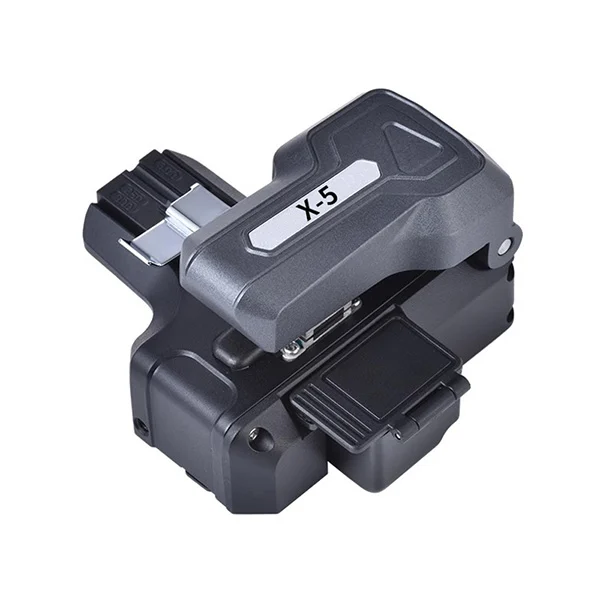
Angled fiber cleavers that produce APC-angle end-faces for low-reflectance splices and connectors. Request a quote.
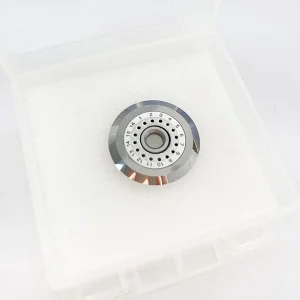
Replaceable cleaver blades that renew cleave quality — hardened, multi-position blades matched to common fiber cleavers. Request a quote.
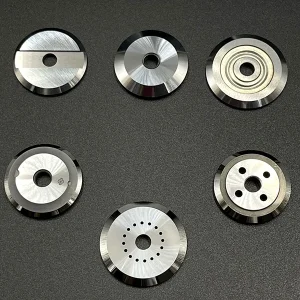
Precision fiber optic cleaver blades — hardened, high-cleave-count replacement blades that restore low-loss cleaving. Request a quote.
Explore related categories across industry, application, and performance attributes.
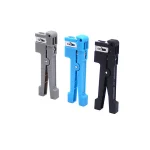 Fiber Stripper Precision fiber strippers that remove coating, buffer and jacket without nicking the glass beneath. Calibrated gauges for 250um and 900um coating and cable jacket, in single-port and multi-port designs — clean, no-nick removal that prevents fractures and fouled splices.
 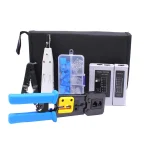 Crimping Tools Ratcheted crimping tools with interchangeable dies for fiber connectors, RJ45 modular plugs and coax F-connectors. The ratchet guarantees full, consistent crimp force every time, and one handle spans four-, six- and eight-position plugs plus coax — a single tool for a mixed kit.
 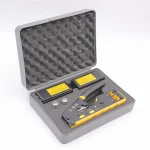 Termination Tools Termination tools for both fiber and copper: field-termination tools that seat mechanical connectors on site, and impact punch-down tools for 110 and other IDC blocks. Single-pair and multi-pair versions with interchangeable blades for fast, reliable connections that hold up.
 Cleave Angle Explained
Splice and connector loss are exquisitely sensitive to the geometry of the end face, and the cleaver is what creates that geometry. A high-quality cleaver produces a cleave angle well under one degree — typically in the tenths — because as the angle grows, so does the air gap and the misalignment at the joint, and with them the insertion loss and back reflection. A fusion splicer will even report the cleave angle it sees, which is the field's way of admitting that the splice is only as good as the cleave it inherits.
Selecting a cleaver, then, is mostly about consistency and endurance. A tool that cleaves at 0.5 degrees once but drifts after a hundred uses is worse than one that holds 0.5 degrees for thousands. Blade life and indexing — how many cleave positions the blade offers before replacement — set the real cost per cleave. And the fiber matters: a cleaver tuned for standard 250 µm coating and a drop-cable cleaver built for flat FTTH cable are different tools. Match precision, endurance, and fiber type, and the cleave stops being the weak link.
OEM / ODM Programs
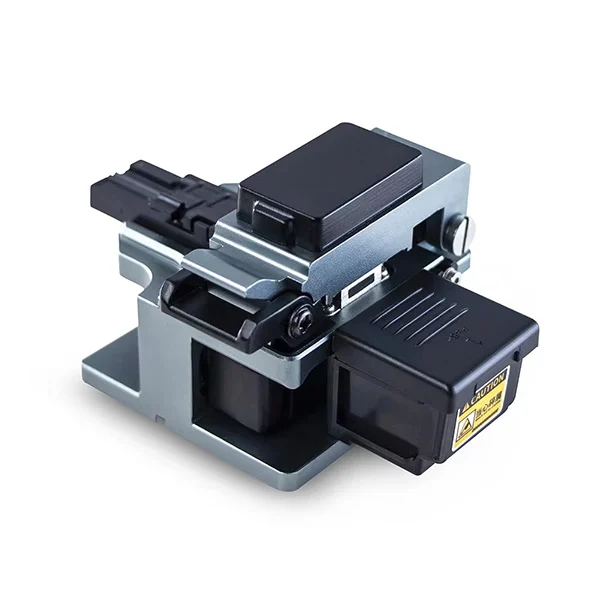
A cleaver is defined by its blade and its fixturing, and both are configured to your market. We set the blade material, hardness, and indexing to the cleave-life spec you want to advertise, and tune the fibre fixturing for the coatings and cable types your customers cleave — standard single fiber, drop cable, or multiple positions for higher throughput.
Branding follows through the tool. The body colour and finish, the printed logo, and the packaging ship as your product, and cleavers slot cleanly into a private-label termination kit alongside strippers and splice tools. It is a cleaver line built to your fiber reality and your cleave-quality claim, delivered at a workable MOQ, with samples so you can verify the angle on your own fiber before committing.
Need a Custom Cleaver?
Tell us the fiber types, cleave-angle target, and blade life your customers need. We will match them to a cleaver built for your workflow and your brand.
NDA available · ISO-aligned production · English & technical support
Six dimensions define a cleaver build. Use them as your OEM brief.
The headline spec — sub-degree, typically in the tenths — that governs splice and connector loss. Consistency matters as much as the peak figure.
Cleaves per blade position and the number of positions set the cost-per-cleave and service interval.
Standard 250 µm, 900 µm tight-buffer, or flat drop cable — the fixturing must match what your customers cleave.
Single-fiber precision cleavers versus higher-throughput designs for volume termination work.
How the fiber is clamped and presented determines cleave repeatability across operators.
Offcut collection keeps the workspace and the end face clean — a small feature with outsized field value.
Share your fiber types, cleave-angle target, and blade life; we confirm the cleaver configuration.
We set blade, fixturing, and indexing, then align OEM body and packaging to your brand.
Samples let you verify cleave angle and consistency on your own fiber before volume.
Stable manufacturing with consistent QC, flexible MOQs, and global logistics for ongoing supply.
Refined blades and fixturing hold a sub-degree cleave across thousands of uses — consistency, not just a good first cut.
Blades, fixturing, bodies, and packaging all ship under your brand — a private-label cleaver line, not a re-badged unit.
High-index blade life lowers cost-per-cleave and lengthens service intervals for your customers.
A real engineer, usually within a business day, for distributors in 40+ countries.
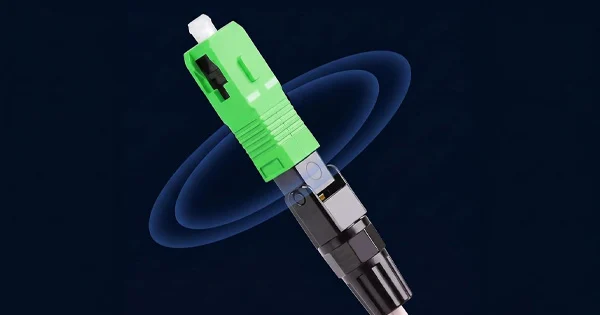
How to connect two fiber optic cables: fusion splicing, mechanical splicing, and connectors compared, with steps, trade-offs, and the strip-clean-cleave basics.
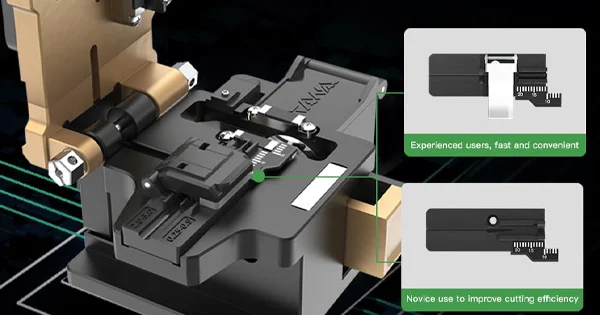
How to cut optical fiber cable properly: strip, clean, and cleave in sequence, the tools you need, safety, and the mistakes that ruin an end face.
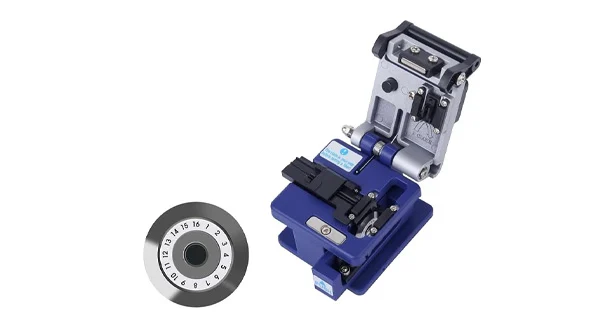
A fiber cleaver creates a flat, perpendicular end face on optical fiber for splicing and termination. Learn how it works, cleaving vs cutting, and why cleave quality matters.
It scores and separates the glass fiber to produce a flat, perpendicular end face — the precondition for low-loss fusion splicing or a mechanical connector. The quality of that end face largely determines joint loss.
Because splice and connector loss rise with cleave angle. A good cleaver holds well under one degree; a poor or worn one raises the angle, increasing insertion loss and back reflection at every joint.
Blades are rated in cleaves per position, and most offer multiple indexed positions before replacement. Total blade life sets the cost-per-cleave, which we publish per model.
Yes. Flat FTTH drop cable and standard 250 u00b5m fiber present differently, so fixturing differs. Choose the cleaver tuned to the cable your customers actually terminate.
Fixturing and alignment. Well-designed clamping presents the fiber the same way every time, so results depend less on the individual holding the tool.
Better designs include offcut collection, keeping the workspace and the next end face clean — a small feature that matters in the field.
Fully. Blade spec, fixturing, body finish, and packaging all carry your brand, at low MOQs — and slot into a private-label termination kit.
Tell us about your application and we will respond with material recommendations, sample options, and pricing as soon as possible.