Crimping Tools
Professional Wire Crimping Tool
Professional wire crimping tools with ratchet control for reliable, gas-tight terminations in demanding work. Request a quote.

A connector is only as reliable as the crimp that holds it. Under-crimp and it works loose in service; over-crimp and you deform the ferrule or the contact. The right crimping tool applies a calibrated, repeatable force through a die matched to the connector — every time, in every technician's hand. As a cable crimping tool manufacturer and supplier, Aevumix has produced crimp tools for both fiber and copper termination for 16 years, because a real installation kit needs both.
The line spans fiber-connector crimpers, RJ45 network crimpers for four-, six-, and eight-position modular plugs, and coaxial F-connector and compression tools. Dies and configurations are open to OEM and ODM supply.
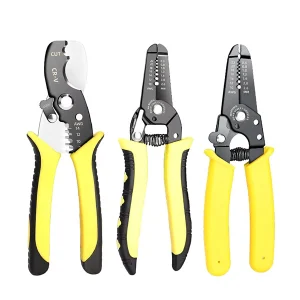
Professional wire crimping tools with ratchet control for reliable, gas-tight terminations in demanding work. Request a quote.
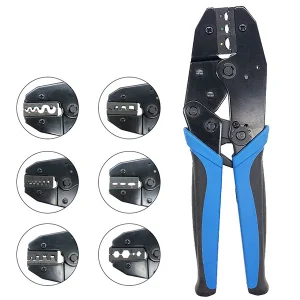
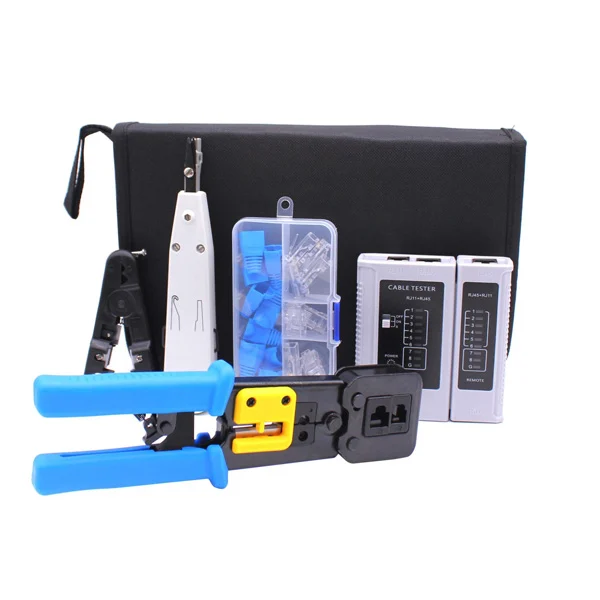
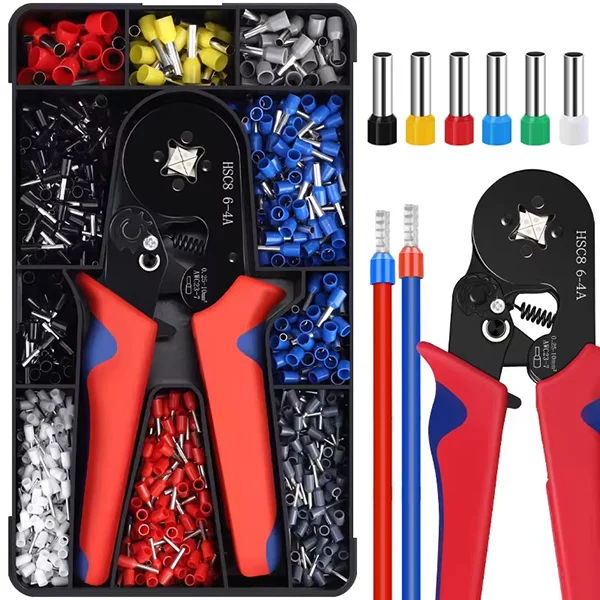
Wire terminal crimpers with ratchet control for consistent, gas-tight terminal crimps across insulated and non-insulated terminals. Request a quote.
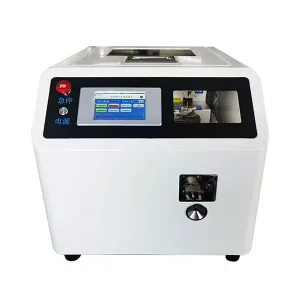
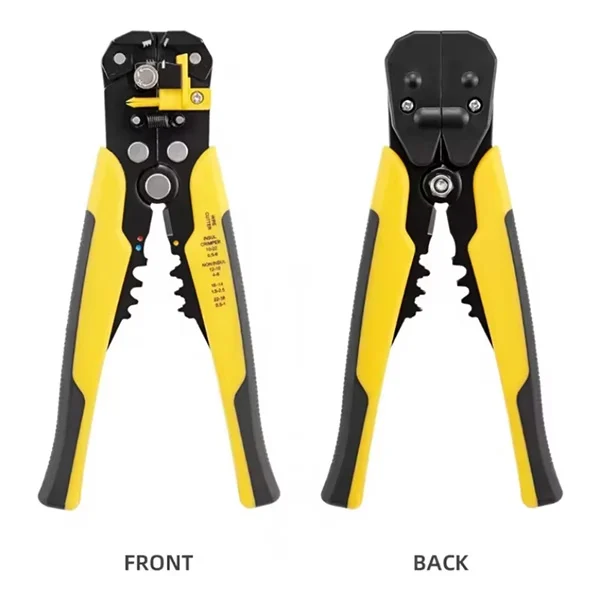
Automatic crimping tools with self-adjusting jaws for consistent, repeatable crimps across wire gauges. Request a quote.
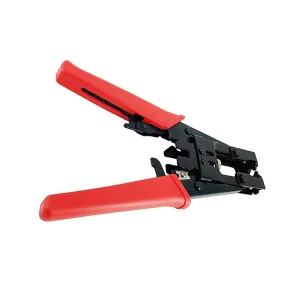
Cable crimping tools for reliable terminations across connector and cable types — ratchet control and interchangeable dies. Request a quote.
Explore related categories across industry, application, and performance attributes.
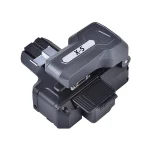 Fiber Cleavers High-precision fiber cleavers that produce a flat, sub-degree end face for low-loss fusion splicing and connectors. Consistent cleave angle across thousands of cuts, high blade life with multiple indexed positions, and options for standard 250um fiber and flat FTTH drop cable.
 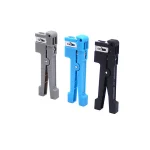 Fiber Stripper Precision fiber strippers that remove coating, buffer and jacket without nicking the glass beneath. Calibrated gauges for 250um and 900um coating and cable jacket, in single-port and multi-port designs — clean, no-nick removal that prevents fractures and fouled splices.
 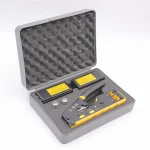 Termination Tools Termination tools for both fiber and copper: field-termination tools that seat mechanical connectors on site, and impact punch-down tools for 110 and other IDC blocks. Single-pair and multi-pair versions with interchangeable blades for fast, reliable connections that hold up.
 Why the Die and the Force Matter
Crimping looks simple — squeeze a connector onto a cable — but the reliability lives in two details: the die and the force. The die is the shaped cavity that forms the crimp, and it must match the connector precisely; a die meant for one ferrule or contact will deform another. The force is what a ratchet mechanism guarantees: it will not release until the full, correct pressure has been applied, so every crimp is identical regardless of who squeezes the handle. Remove either and you get intermittent, unreliable terminations that fail in the field, not on the bench.
Selection then splits by what you terminate. Fiber-connector crimpers secure the optical fiber connector body and strain-relief to the fiber and cable in mechanical and field-connector systems. On the copper side, an RJ45 crimper handles the modular connector — and because these modular plugs come in four-, six-, and eight-position forms, die coverage matters. Coax work calls for F-connector crimp or compression tools entirely. The efficient answer for a mixed kit is one ratcheting handle with interchangeable dies, so a single tool spans fiber, RJ45, and coax as the job demands.
OEM / ODM Programs
A crimper is its die set, so we configure dies to the connector systems your customers run — fiber-connector crimp profiles, RJ45 four/six/eight-position modular dies, and coax F-connector crimp or compression dies — all on a ratcheting handle calibrated to the correct force. Interchangeable-die designs let one tool cover several systems, which is what a mixed field kit needs.
Branding runs through the tool. The handle colour and finish, the printed logo, and the packaging ship as your product, and crimpers pair into a private-label termination kit with strippers and cleavers. It is a crimp-tool line built to your connector reality — fiber, network, and coax — delivered at a workable MOQ, with samples so you can verify the crimp on your own connectors before committing.
Need a Custom Crimper?
Tell us the connector systems — fiber, RJ45, coax — your customers terminate. We will match them to a crimp tool and die set built for your workflow and your brand.
NDA available · ISO-aligned production · English & technical support
Six dimensions define a crimper build. Use them as your OEM brief.
Matched to the connector — fiber ferrule, RJ45 modular, or coax F — the die is what forms a correct crimp. Precision here is everything.
A calibrated ratchet guarantees full force before release, so every crimp is identical regardless of operator.
Fiber-connector, RJ45 (4/6/8-position), and coax coverage decide how much of the plant one tool serves.
One handle with swappable dies spans several connector systems — the efficient choice for a mixed kit.
Handle geometry and mechanical advantage reduce operator fatigue over a day of repetitive crimping.
Frame and die materials set how many crimps the tool delivers before wear affects the termination.
Share the connector systems you terminate — fiber, RJ45, coax; we confirm the tool and die set.
We set dies, ratchet force, and handle, then align OEM finish and packaging to your brand.
Samples let you verify crimp quality on your own connectors before volume.
Stable manufacturing with consistent QC, flexible MOQs, and global logistics for ongoing supply.
Calibrated dies and ratcheted force produce identical, reliable terminations — no loose contacts, no deformed ferrules.
Dies, handles, kits, and packaging all ship under your brand — a private-label crimp-tool line, not a re-badged unit.
Interchangeable dies span connector systems, so one tool line serves contractors who work all three.
A real engineer, usually within a business day, for distributors in 40+ countries.
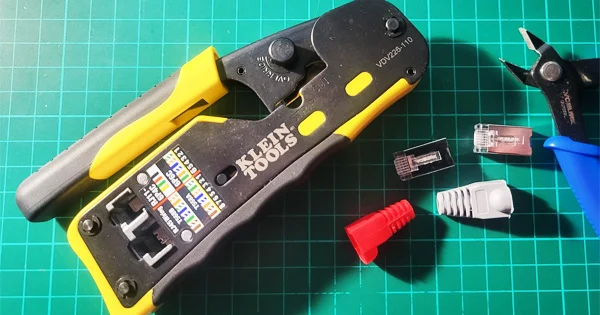
A complete cable termination tools list for copper and fiber: strippers, crimpers, punch-down tools, cleavers, splicers, and the testers to verify your work.
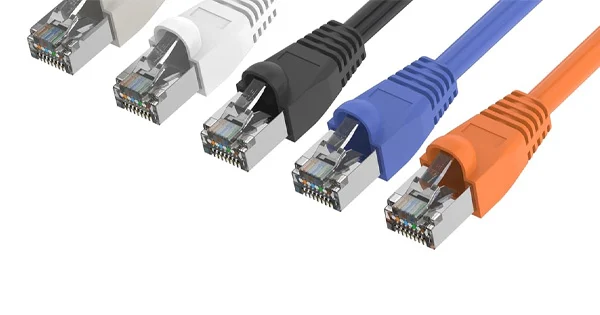
RJ45 color coding for straight-through and crossover cables: the T568A and T568B color order, when to use each cable type, and how to verify your wiring.
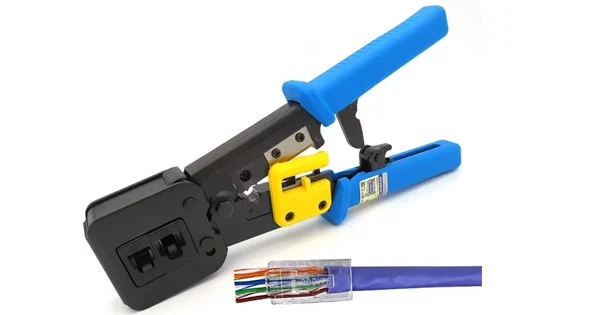
How to use a crimping tool for RJ45: strip, arrange wires in T568B order, trim, insert, crimp, and test, plus common mistakes and tips for Cat6.
Because a ratchet won't release until full, correct force is applied — guaranteeing every crimp is identical regardless of who holds the handle. Without it, crimp quality varies with operator strength and technique.
With interchangeable dies, yes. A single ratcheting handle accepts fiber-connector, RJ45 modular, and coax F dies, so one tool spans a mixed installation kit.
Modular plugs come in four-, six-, and eight-position forms (the eight-position being the familiar RJ45). Die coverage across these determines which network connectors a crimper serves.
Because the die forms the crimp geometry. A die meant for one connector will under-form or deform another, producing an unreliable termination. Matched dies are non-negotiable.
With coax dies, yes — F-connector crimp or compression tools terminate coaxial cable. These are configured as part of the same interchangeable-die system.
Frame and die materials set the number of crimps before wear affects quality. We build to industrial duty and publish die life so buyers can compare.
Fully. Handle finish, die set, kit, and packaging all carry your brand, at low MOQs — and pair into a private-label termination kit.
Tell us about your application and we will respond with material recommendations, sample options, and pricing as soon as possible.