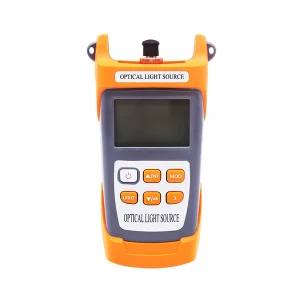
Fiber Light Sources
Fiber Optic Cable Light Source
Stable fiber optic cable light sources for insertion loss testing paired with a power meter — laser and LED. Request a quote.

A loss measurement is only as trustworthy as the light going in. That is the whole job of a fiber light source: to launch a stable, known optical signal at a calibrated wavelength, so that when a power meter reads the other end, the difference is genuinely the link's loss and not the source wobbling. Handheld and built for the field, a stable light source is the launch half of every insertion-loss test — on fiber cable, on passive components, on CATV and FTTH subscriber networks alike. As a fiber light sources manufacturer and supplier, Aevumix has built these sources for three decades.
The line covers handheld stable light sources in single and multi-wavelength configurations, plus combined source-and-meter loss test sets — all configurable in wavelength and connector, and open to OEM and ODM supply.
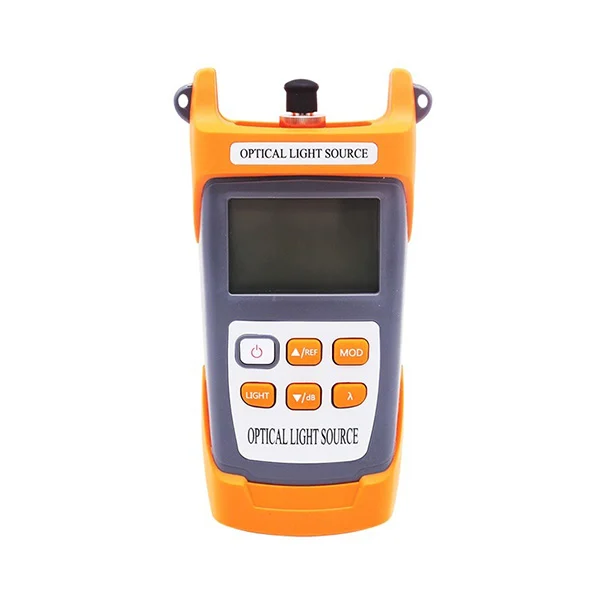
Stable fiber optic cable light sources for insertion loss testing paired with a power meter — laser and LED. Request a quote.
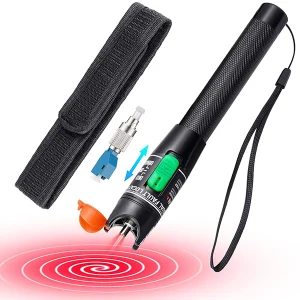
Fiber light source pens — pocket visible-light sources for fast continuity checks and fiber tracing in the field. Request a quote.
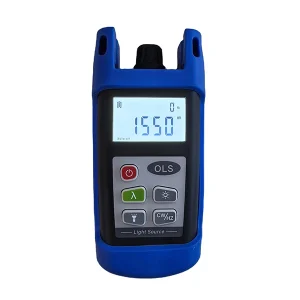
LED light sources for fiber optic multimode loss testing — stable, multi-wavelength output paired with a power meter. Request a quote.
Explore related categories across industry, application, and performance attributes.
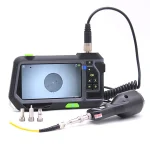 Fiber Optic Inspection Scopes Handheld video inspection probes with autofocus and automatic IEC 61300-3-35 pass/fail grading. Reach connectors inside patch panels and bulkheads, inspect LC, SC, FC and MPO end faces, and share results via on-screen display, USB or WiFi for fast, objective field inspection.
 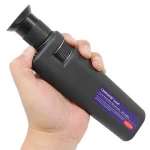 Fiber Optic Microscopes Bench fiber optic microscopes in 200x, 400x and dual-magnification for detailed end-face examination. 200x gives a fast whole-ferrule view; 400x reveals fine scratches and polish quality. Adapters for standard, bare and polarization-maintaining fiber suit QC labs and R&D benches.
 Why Source Stability Matters
Insertion-loss testing is a two-ended measurement, and the fiber light source owns the sending end. It couples a stable optical signal into the fiber at a specific, calibrated wavelength — from a laser diode source for single mode work, or an LED for multimode — and the entire measurement rests on one property: stability. Read against an optical power meter, it must hold steady: if the source drifts while you move from the reference reading to the link reading, that drift shows up as phantom loss, and the certificate is wrong. This is why a good source specifies its output stability tightly, in line with insertion-loss standards such as IEC 61280; it is the reference the whole test trusts.
Choosing a source follows the network. Wavelength has to match what your customers certify at — 850 and 1300 nm for multimode plant, 1310, 1550, and often 1625 nm for single mode — because a source and a power meter only agree when they work at the same calibrated wavelength. Output type matters too: laser sources for the tight coupling and long reach of single mode links, LED sources for the mode-filling launch multimode testing prefers. And because the source rarely travels alone, many buyers pair it with a meter as an optical loss test set, or choose a light source and power meter combined in one handheld body. Match wavelength and output to the plant, and the launch end of every loss test becomes something you can rely on.
OEM / ODM Programs
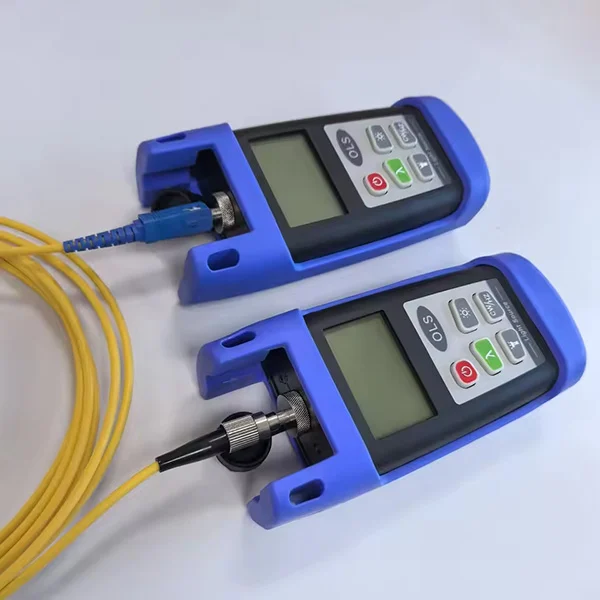
A light source is defined by its wavelengths and its stability, so we configure the wavelength set and output type — laser or LED, single or multi-wavelength — to the networks your customers test, and match the connector interface to their plant. Where a complete solution is wanted, we pair the source with a power meter as an optical loss test set, or integrate both into a single handheld unit.
Branding runs through the instrument. Housing, boot logo, firmware, and on-screen wavelength selection carry your identity, and the packaging and accessory kit — reference cords, adapters, case — ship as yours. It also drops naturally into a private-label test line beside the OTDR, power meter, and visual fault locator. It is a source line built to your wavelengths and your stability claim, delivered at a workable MOQ, with samples so you can verify launch stability against your own reference before committing.
Need a Custom Light Source?
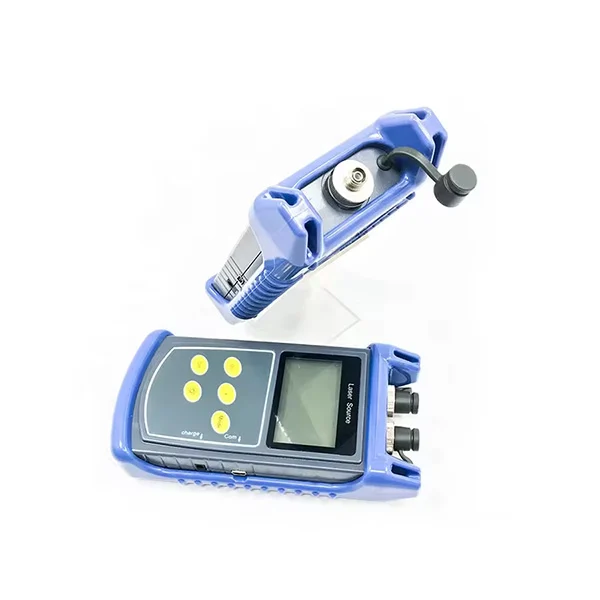
Tell us the wavelengths, output type, and whether you want a matched meter or a combined unit. We will match them to a light source or loss test set built for your workflow and your brand.
NDA available · ISO-aligned production · English & technical support
Six dimensions define a light-source build. Use them as your OEM brief.
850/1300 nm for multimode, 1310/1550/1625 nm for single mode — the source and meter must share calibrated wavelengths to agree.
Laser source for single mode reach and tight coupling; LED source for the mode-filling launch multimode testing prefers.
Low short- and long-term drift is the defining spec — the stability the whole loss measurement references.
A standalone source, a matched source-and-meter loss test set, or both functions combined in one handheld body.
Interchangeable adapters match the source to the connectors your customers run.
Continuous output for loss testing, plus modulated tones (e.g. 270 Hz / 1 kHz / 2 kHz) for fiber identification down the link.
Share your wavelengths, output type, and whether a meter pairing is needed; we confirm the configuration.
We set wavelengths, output, and stability, then align OEM housing and packaging to your brand.
Samples let you verify launch stability against your own reference before volume.
Stable manufacturing with consistent QC, flexible MOQs, and global logistics for ongoing supply.
Low-drift output means the light going in stays constant, so the loss reading coming out is the link's, not the source's.
Wavelengths, output, housing, and reporting all ship under your brand — a private-label source line, not a re-badged unit.
Standalone sources, matched source-and-meter loss test sets, or combined handheld units — configured to how your customers test.
A real engineer, usually within a business day, for distributors in 40+ countries.
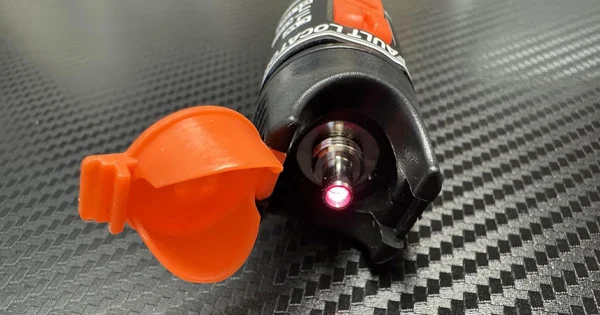
Incandescent and thermal lamps cannot be used in fiber optic systems. Learn why, what a fiber source must do, and the special case of the LED.
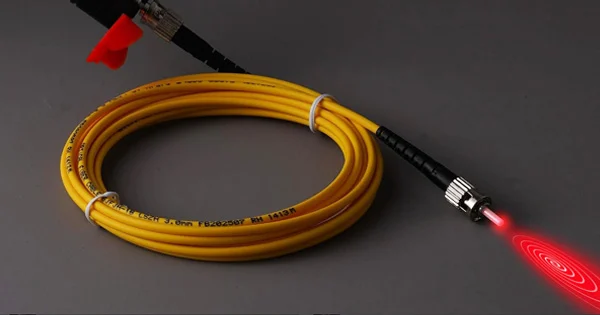
The light-emitting sources used in fiber optics are LEDs, laser diodes, and VCSELs. Learn how each works, the coherent vs incoherent distinction, and which fiber each suits.
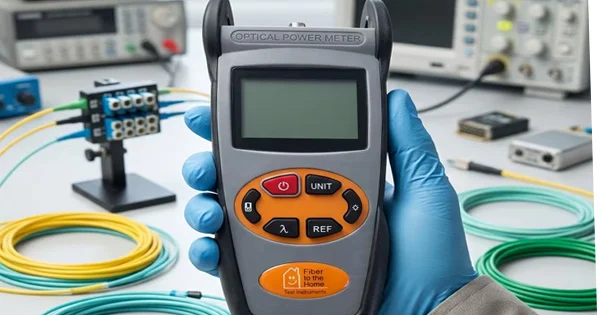
How to use an optical power meter to measure fiber power and loss: cleaning, wavelength matching, setting the reference, reading dBm vs dB, and avoiding mistakes.
It launches a stable, calibrated optical signal into a fiber at a set wavelength. Paired with a power meter at the far end, it enables the insertion-loss measurement that fiber acceptance depends on.
Because loss is the difference between a reference reading and a link reading. If the source drifts between the two, that drift appears as false loss. A stable source is the trustworthy reference the whole test relies on.
Match it to the fiber. Laser sources suit single mode work for their tight coupling and reach; LED sources suit multimode for their mode-filling launch. Testing both plant types calls for both, or a source that offers each.
The ones your customers certify at — 850 and 1300 nm for multimode, 1310, 1550, and often 1625 nm for single mode. Source and meter must share calibrated wavelengths to produce a valid result.
A matched light source and power meter used together to measure link loss end to end. We supply source and meter as a set, or combined into a single handheld unit.
Yes — with modulated tone output (such as 270 Hz, 1 kHz, or 2 kHz), a source lets a detector or identifier confirm which fiber carries the signal, useful in dense bundles.
Fully. Wavelengths, output, housing, firmware, and packaging all carry your brand, at low MOQs — as a standalone source or a complete loss test set.
Tell us about your application and we will respond with material recommendations, sample options, and pricing as soon as possible.