Fiber Optic Equipment
Multifiber Pro Optical Power Meter & Fiber Test Kits
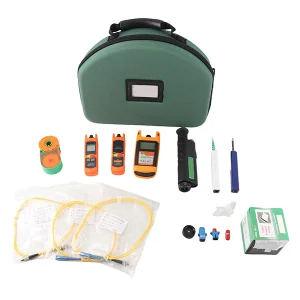
Multi-fiber pro power meters and complete fiber test kits for efficient loss testing across many fibers and connectors. Request a quote.

Ask whether a fiber link passes, and the answer starts here. An optical power meter measures how much light actually arrives — the single number that insertion-loss certification is built on. Pair it with a stable light source and you have the most fundamental test in fiber: the loss measurement that says a link is fit for service, or is not. As an optical power meter manufacturer and supplier, Aevumix has built power meters and sources for that job for 16 years.
The line spans handheld optical power meters, source-and-meter loss test sets, and PON-specific meters for live networks — configurable in wavelength, connector, and calibration, and open to OEM and ODM supply.
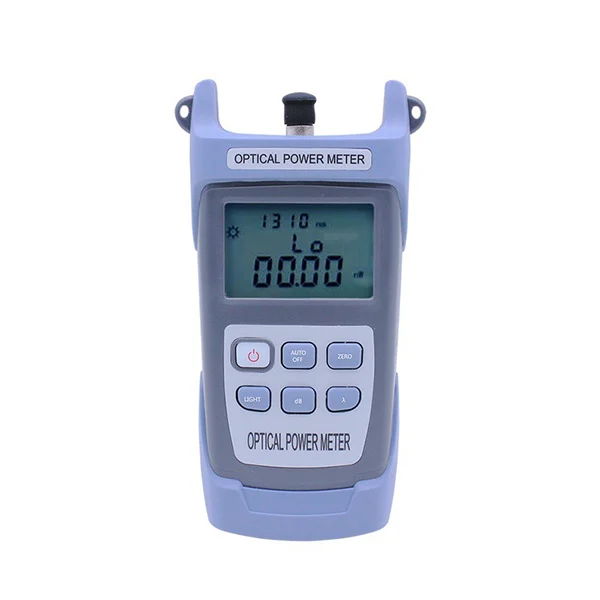
Multi-fiber pro power meters and complete fiber test kits for efficient loss testing across many fibers and connectors. Request a quote.
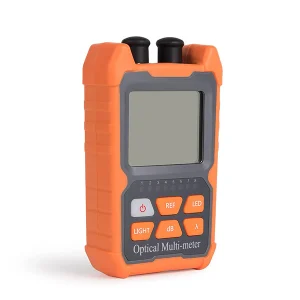
Mini optical power meters — pocket-sized, calibrated instruments for fast dBm and dB power readings in the field. Request a quote.
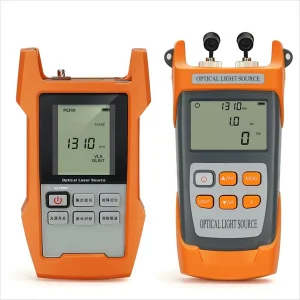
Optical power meters with a built-in or matched light source for complete, accurate insertion loss testing in one kit. Request a quote.
Explore related categories across industry, application, and performance attributes.
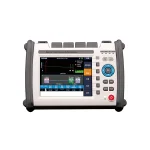 OTDR Tester Handheld, mini and smart OTDR testers that map every splice, connector, bend and break along a fiber by location and loss. Available for single mode, multimode and PON networks, with clear trace analysis and standard .sor reporting for fault location and link certification.
 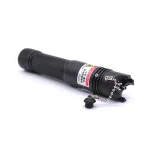 Visual Fault Locator Visual fault locator that flood a fiber with bright red laser light so breaks, tight bends and bad connectors glow visibly. The fastest way to locate a gross fault or verify continuity, working inside the OTDR dead zone, with 2.5mm, LC and MPO options and steady or pulsed output.
 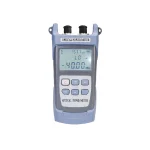 PON Tester Pass-through PON testers that read a live FTTH network without dropping subscribers. Measure downstream, upstream and video power on separate calibrated channels for GPON, EPON and 10G-PON, with pass/fail thresholds for fast turn-up and troubleshooting on working networks.
 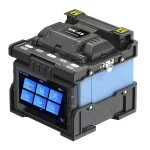 Fiber Fusion Splicer Fusion splicers that permanently join two fibers with a low-loss fused joint. Core-alignment models for backbone and long-haul (around 0.02 dB) and cladding-alignment models for cost-effective FTTH (around 0.05 dB), with fast cycle times and rugged, field-ready build.
 Loss Measurement Explained
Insertion loss is the currency of fiber acceptance, and an optical power meter is what mints it. The method is simple and rigorous: measure the source power as a reference, connect through the link under test, measure again, and the difference in decibels is the link's loss, following procedures set out in standards such as IEC 61280. Get a clean reference and a calibrated detector and that number is defensible; get either wrong and every certificate built on it is suspect. This is why a power meter's accuracy and calibration traceability are not fine print — they are the product.
Selection follows the measurement. Wavelength coverage has to include the ones your customers test at — 850 and 1300 nm for multimode, 1310, 1550, and 1625 nm for single mode — because a meter reads correctly only at calibrated wavelengths. The detector's dynamic range must span from a strong source to a faint, heavily attenuated signal at the far end of a long link. And for a complete solution, a matched light source turns the meter into an optical loss test set — the paired instrument that acceptance testing actually calls for. Match wavelength, range, and pairing to the work, and the loss number can be trusted.
OEM / ODM Programs
A power meter is defined by its detector and its calibration, so we configure the **wavelength set and calibration points** to the standards your customers certify against, and match the **connector interface** to their plant. Where a complete solution is wanted, we pair the meter with a **light source** as an optical loss test set, and add **PON-wavelength** capability for live-network work.
Branding runs through the instrument. **Housing, boot logo, firmware, and on-screen units** carry your identity; **data logging and report export** follow your format; and **packaging and cases** ship as yours. It is a private-label metering line built to your wavelengths and your accuracy claim, delivered at a workable MOQ, with samples so you can verify readings against your own reference before committing.
Need a Custom Power Meter?
Tell us the wavelengths, connector, and whether you need a matched source. We will match them to a power meter or loss test set built for your workflow and your brand.
NDA available · ISO-aligned production · English & technical support
Six dimensions define a power-meter build. Use them as your OEM brief.
Calibrated points across 850–1625 nm — a meter reads accurately only at its calibrated wavelengths, so coverage must match the network.
The dynamic range and traceable accuracy that make a dBm reading defensible from strong source to faint far-end signal.
A standalone meter, or a meter paired with a light source as a complete optical loss test set for two-ended certification.
Filtered PON-wavelength versions read live FTTH power without disrupting upstream or downstream traffic.
Interchangeable adapters match the meter to the connectors your customers run.
On-device logging and report export turn readings into acceptance documentation.
Share your wavelengths, connector, and whether a source is needed; we confirm the configuration.
We set detector, calibration, and firmware, then align OEM housing and packaging to your brand.
Samples let you verify readings against your own reference before volume.
Stable manufacturing with consistent QC, flexible MOQs, and global logistics for ongoing supply.
Traceable calibration and a stable detector produce loss numbers you can put a customer sign-off behind — the whole purpose of the instrument.
Detector, wavelengths, housing, and reporting all ship under your brand — a private-label metering line, not a re-badged unit.
Standalone meters or matched source-and-meter loss test sets, configured to how your customers certify.
A real engineer, usually within a business day, for distributors in 40+ countries.
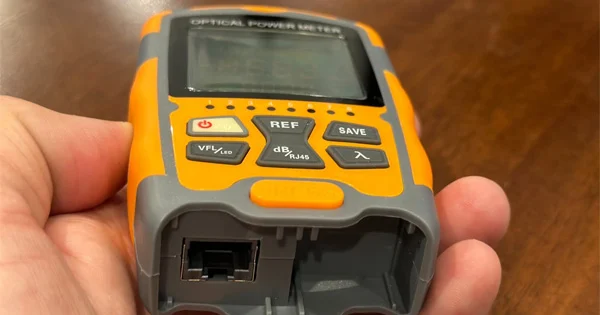
How an optical power meter works: a photodiode converts light to current proportional to optical power. Learn about wavelength calibration, detectors, and referencing.
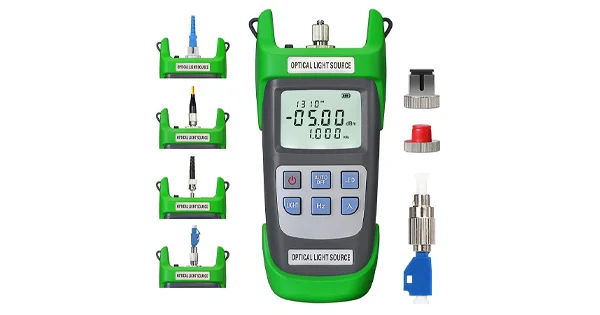
A PON power meter tests live PON links inline, reading upstream and downstream wavelengths at once; an optical power meter measures one wavelength on dark fiber. Learn when to use each.
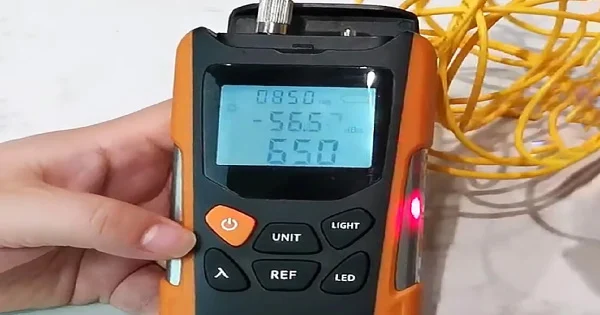
Understand optical power meter readings: what dBm and dB mean, what a good value is, how optical power measurement works, and why readings can mislead.
The optical power arriving at its detector, in dBm — and, referenced against a source, the insertion loss of a link in dB. That loss figure is the basis of fiber acceptance certification.
A detector's response varies with wavelength, so a meter reads accurately only at its calibrated points. If your customers test at 1310 and 1550 nm, the meter must be calibrated there.
A matched light source and power meter used together to measure link loss from both ends. It is the paired instrument acceptance testing calls for, and we supply meter and source as a set.
For live FTTH, yes — a PON power meter reads the filtered upstream and downstream wavelengths without disrupting traffic, which a general-purpose meter is not designed to do.
Enough to span a strong reference source and a faint signal at the far end of your longest link. We configure detector range to the networks your customers test.
Yes. On-device logging and report export turn measurements into the acceptance documentation customers require, in your branded format.
Fully. Detector, calibration, housing, firmware, and packaging all carry your brand, at low MOQs — as a meter or a complete loss test set.
Tell us about your application and we will respond with material recommendations, sample options, and pricing as soon as possible.