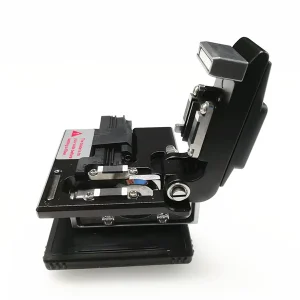
Fiber Cleavers
Angled Fiber Cleaver
Angled fiber cleavers that produce APC-angle end-faces for low-reflectance splices and connectors. Request a quote.

A fiber link is only as good as the hands and the tools that built it. Strip the coating unevenly, cleave at the wrong angle, crimp a connector loose, and no amount of testing later will fully undo the damage. Optical fiber cable tools — OFC tools — are where a reliable network actually begins, and As an optical fiber cable tools manufacturer and supplier, Aevumix has produced them for the technicians who terminate, splice, and connectorise fiber every day for 16 years.
This category spans the full build-out toolkit: high-precision cleavers, fiber and cable strippers, crimping tools, and termination tools, extending to the copper and network-side tools that live in the same kit. Every line is open to OEM and ODM supply.
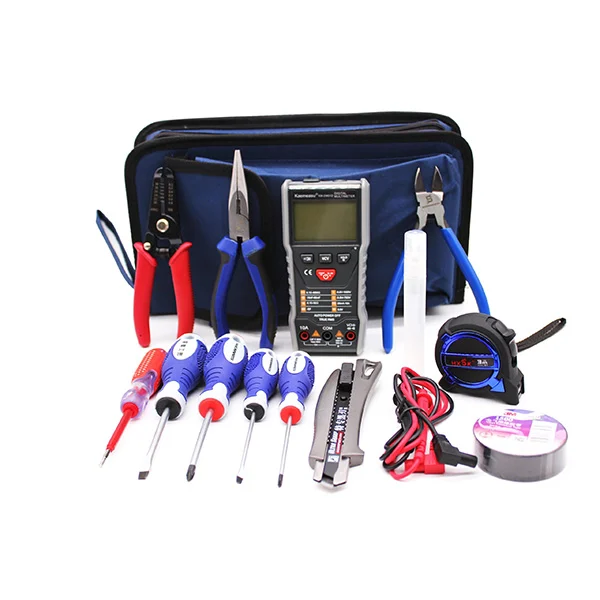
Angled fiber cleavers that produce APC-angle end-faces for low-reflectance splices and connectors. Request a quote.
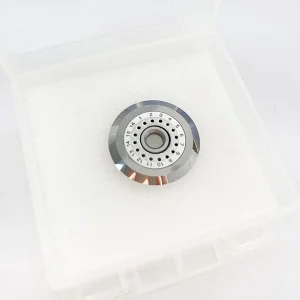
Replaceable cleaver blades that renew cleave quality — hardened, multi-position blades matched to common fiber cleavers. Request a quote.
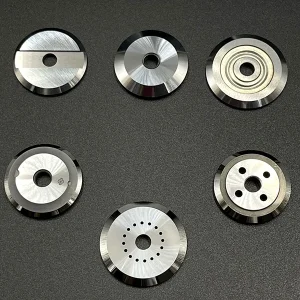
Precision fiber optic cleaver blades — hardened, high-cleave-count replacement blades that restore low-loss cleaving. Request a quote.
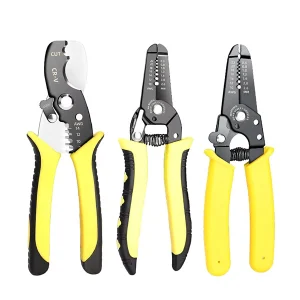
Professional wire crimping tools with ratchet control for reliable, gas-tight terminations in demanding work. Request a quote.
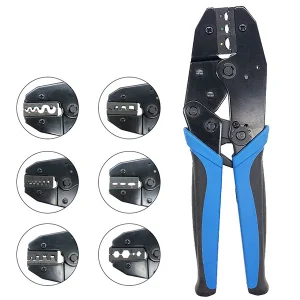
Wire terminal crimpers with ratchet control for consistent, gas-tight terminal crimps across insulated and non-insulated terminals. Request a quote.

Automatic crimping tools with self-adjusting jaws for consistent, repeatable crimps across wire gauges. Request a quote.
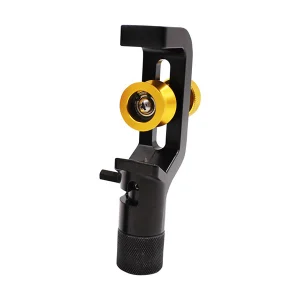
Armored cable stripping tools that score and remove steel armor safely without damaging the fibers inside. Request a quote.
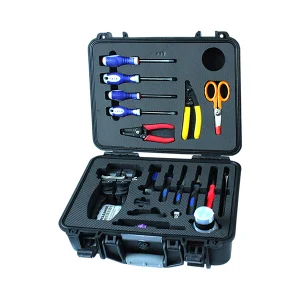
Fiber optic tools kits with strippers, cleaver, cleaners and prep tools matched for field installation and splicing. Request a quote.
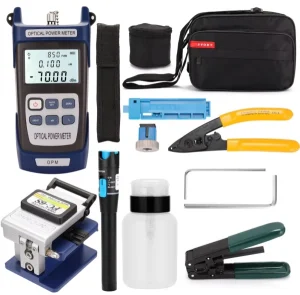
Fiber optic splicing tools — strippers, cleaver, cleaners and sleeves — for clean preparation and low-loss splices. Request a quote.
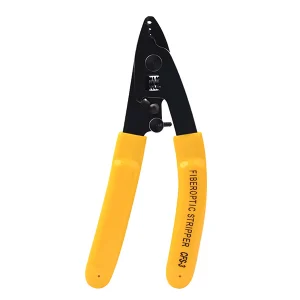
Fiber cable jacket stripping tools that open the outer jacket to a controlled depth without nicking buffer tubes or fibers. Request a quote.
Explore related categories across industry, application, and performance attributes.
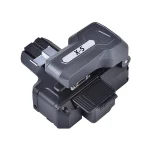 Fiber Cleavers High-precision fiber cleavers that produce a flat, sub-degree end face for low-loss fusion splicing and connectors. Consistent cleave angle across thousands of cuts, high blade life with multiple indexed positions, and options for standard 250um fiber and flat FTTH drop cable.
 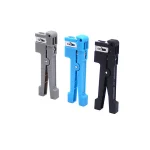 Fiber Stripper Precision fiber strippers that remove coating, buffer and jacket without nicking the glass beneath. Calibrated gauges for 250um and 900um coating and cable jacket, in single-port and multi-port designs — clean, no-nick removal that prevents fractures and fouled splices.
 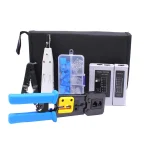 Crimping Tools Ratcheted crimping tools with interchangeable dies for fiber connectors, RJ45 modular plugs and coax F-connectors. The ratchet guarantees full, consistent crimp force every time, and one handle spans four-, six- and eight-position plugs plus coax — a single tool for a mixed kit.
 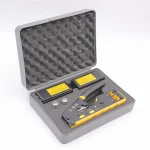 Termination Tools Termination tools for both fiber and copper: field-termination tools that seat mechanical connectors on site, and impact punch-down tools for 110 and other IDC blocks. Single-pair and multi-pair versions with interchangeable blades for fast, reliable connections that hold up.
 The Termination Workflow
Fiber termination is a sequence, and each OFC tool owns one step in it. It begins with the stripper, removing the coating and buffer without nicking the glass beneath — a scratch here becomes a break later. Next the cleaver scores and separates the fiber to produce a flat, perpendicular end face, the precondition for a low-loss splice or connector; cleave angle is measured in fractions of a degree because that is how much it matters.
From there the path forks by termination method. Fusion work hands off to a splicer, where fusion splicing joins two fibers permanently; mechanical and field-connector work calls on crimping and termination tools to secure the optical fiber connector to the fiber and cable. And because real installations rarely stop at fiber — patch panels, network drops, and copper cross-connects share the same rack — the kit extends to crimpers, punch-down tools, and cable preparation tools for the copper side. In modern fiber-optic communication, matching each tool to its step is what makes the whole build go faster and cleaner.
OEM / ODM Programs
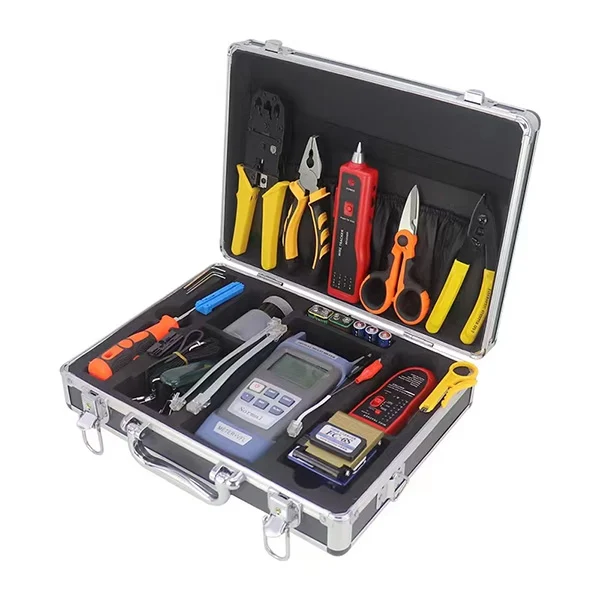
Because termination methods differ — fusion, mechanical, field connector, copper — customisation starts with what your customers actually build. We configure cleaver blade and angle for single-fiber or ribbon work, stripper gauges for the coatings and cable types in your market, and crimp dies and termination heads for the connector systems you support.
The brand and format layer is complete. Tool bodies and finishes carry your colour and logo; kits are assembled and cased to your content list; and packaging — blister, box, or roll-up pouch — ships as yours. Whether you serve FTTH drop crews, data center installers, or general network contractors, the toolkit arrives as a private-label OFC line built to your workflow, at an MOQ that makes launching it realistic.
Need Custom OFC Tools?
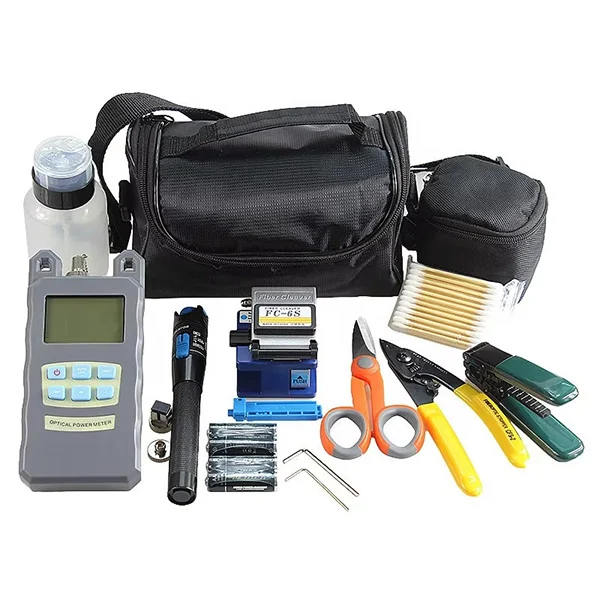
Tell us the termination methods, cable types, and connector systems your customers use. We will match them to a tool line built for your workflow and your brand.
NDA available · ISO-aligned production · English & technical support
Six factors decide whether a tool earns a permanent place in the kit. Use them to frame an OEM brief.
Cleave angle, strip depth, crimp force — the tight tolerances that determine whether a termination passes or fails. This is the heart of tool quality.
Optical tools for stripping and cleaving glass; network tools for crimping and punching copper. A complete kit spans both sides of the rack.
How many terminations a cleaver blade or crimp die delivers before service sets the tool's real cost of ownership.
The coatings, cable constructions, and connector systems a tool handles decide how much of the plant it serves.
Grip, weight, and build quality determine whether a tool survives daily field use and stays accurate.
How tools combine into a cased set — and whether inspection and cleaning join them — shapes the complete offering.
Share your termination methods, cable types, and connector systems; we recommend the right tool line.
We set blades, gauges, and dies, then align OEM bodies, kits, and packaging to your brand.
Samples let you confirm cleave, strip, and crimp quality on your own cable before volume.
Stable manufacturing with consistent QC, flexible MOQs, and global logistics for ongoing supply.
16 years of tooling means cleave angle, strip depth, and crimp force stay within tolerance across thousands of terminations — the difference between pass and rework.
Tool bodies, dies, kits, and packaging all ship under your brand — a private-label OFC line, not re-badged imports.
Optical and network-side tools from a single source simplify sourcing for contractors who work both.
A real engineer, usually within a business day, for distributors in 40+ countries.
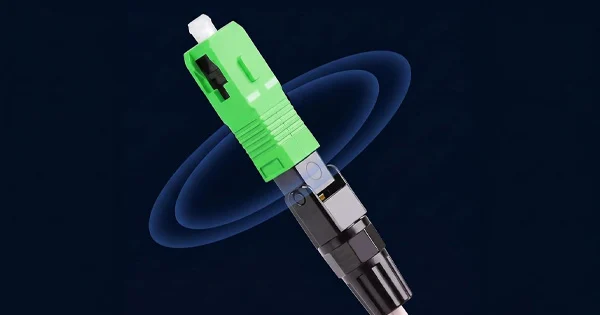
How to connect two fiber optic cables: fusion splicing, mechanical splicing, and connectors compared, with steps, trade-offs, and the strip-clean-cleave basics.
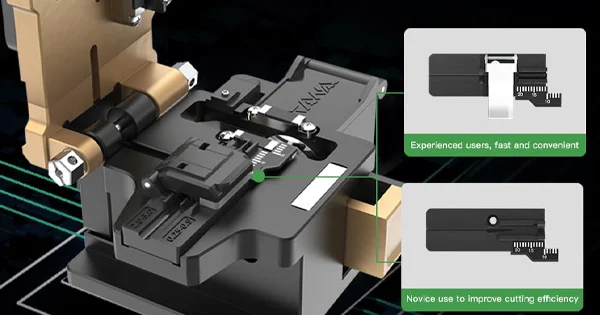
How to cut optical fiber cable properly: strip, clean, and cleave in sequence, the tools you need, safety, and the mistakes that ruin an end face.
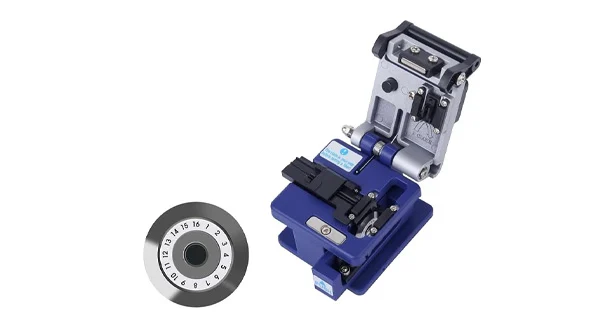
A fiber cleaver creates a flat, perpendicular end face on optical fiber for splicing and termination. Learn how it works, cleaving vs cutting, and why cleave quality matters.
OFC — optical fiber cable — tools are the instruments used to prepare and terminate fiber: strippers, cleavers, crimping tools, and termination tools, plus the copper and network tools that share the same installation kit.
A cleaver produces the flat, perpendicular end face that a low-loss splice or connector depends on. A poor cleave angle raises loss and reflection, so cleave precision is one of the most consequential specs in the whole toolkit.
Yes. Because real installations mix fiber and copper — patch panels, drops, cross-connects — the catalogue includes crimpers, punch-down tools, and cable preparation tools for the network side.
Yes. Crimp dies, termination heads, and stripper gauges are configured to the connector systems and cable types your customers use.
By terminations before service — cleaver blades and crimp dies have rated lifespans that set cost of ownership. We publish these so buyers can compare.
Yes. We case tools into kits to your content list, and can add inspection and cleaning tools to create a complete termination-and-verification set.
Fully. Tool bodies, dies, kit cases, and packaging all carry your brand, at low MOQs suited to launching a line.
Tell us about your application and we will respond with material recommendations, sample options, and pricing as soon as possible.