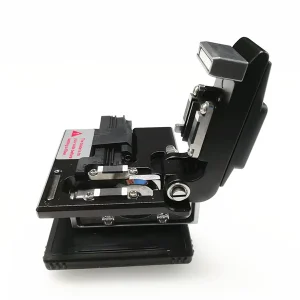
In fiber optic work, one small tool makes or breaks the quality of every splice and termination: the fiber cleaver. If you are wondering what a fiber cleaver is used for, this guide explains its purpose, how it works, why cleaving is different from cutting, and how cleave quality affects your splices.
What Is a Fiber Cleaver Used For?
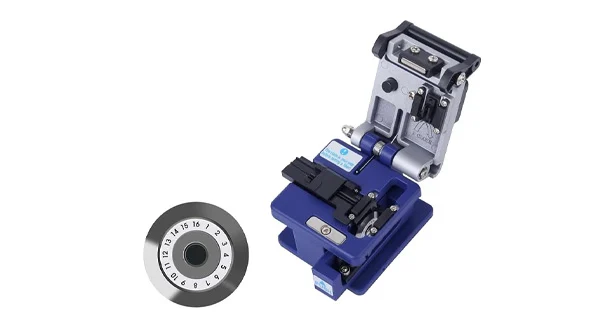
A fiber cleaver is a precision tool used to “cut” an optical fiber to create a perfectly flat end face, perpendicular to the fiber’s axis, in preparation for splicing or termination. This flat, mirror-like end face is essential: when two fibers are joined — by fusion splicing, mechanical splicing, or a splice-on connector — their end faces must meet cleanly for light to pass through with minimal loss and reflection. The cleaver is what produces that quality end face.
In short, a fiber cleaver is used to prepare the fiber end so it can be spliced or connectorized with low loss.
Cleaving vs Cutting: An Important Distinction
Although people say a cleaver “cuts” fiber, cleaving is not cutting in the ordinary sense. You cannot cut optical fiber with scissors or wire cutters — shearing through the glass would deform and shatter the end face, making it useless for optical connections. Cleaving is a controlled break. Just as a glazier scores and snaps a sheet of glass, a cleaver scores a tiny crack in the fiber surface and then applies tension so the glass fractures cleanly along that line. The result is a smooth, flat surface with no protruding or jagged glass — something no cutting tool could achieve.
How a Fiber Cleaver Works
The process is known as the scribe-and-tension (or scribe-and-break) method, and it happens in a few precise steps:
- Hold under tension: the cleaver clamps the stripped fiber and places it under low tension.
- Score the surface: a hard blade — typically diamond or tungsten carbide — makes a very small scratch (a controlled crack) on the fiber surface at the right location.
- Apply tension: the cleaver increases the tension until the crack propagates across the fiber and it breaks.
- Result: a clean end face, ideally at a 90-degree angle to the fiber axis.
Before cleaving, the fiber must be stripped of its coating; after cleaving, the bare fiber tip should not be touched or it will be contaminated.
Why Cleave Quality Matters So Much
The quality of a cleave has an outsized impact on the resulting splice. Much of the variation in splice loss seen between otherwise identical splices comes down to cleave quality. A poor cleave — with an angled, chipped, or cracked end face — causes problems: it can defeat the splicer’s automatic fiber alignment, and cracks in the end face can create bubbles at the splice joint that force the splice to be remade. The smaller the core, the less tolerance there is, so single-mode fiber demands especially good cleaves.
This is why a good cleaver is such a worthwhile investment: every low-loss fusion splice begins with a good cleave.
Cleave Angle: Flat vs Angled
The target cleave angle depends on the application:
| Application | Typical Cleave Angle |
| Fusion splicing | Very flat — around 1° or less |
| Mechanical splices / connectors | Below about 3° |
| APC (angled) terminations | Around 8° to reduce back-reflection |
For most fusion splicing, the flatter and closer to 90 degrees the end face, the lower the resulting splice loss.
Common Cleave Defects
Recognizing a bad cleave is as valuable as making a good one, because a flawed end face should never be spliced. The most common defects are an excessive cleave angle, where the end face is not perpendicular enough and the fibers will not mate cleanly; a “lip” or “hackle,” where a small piece of glass protrudes from the edge; a chip, where a fragment is missing from the end face; and a cracked or misted surface. Any of these raises splice loss or defeats the splicer’s alignment, and cracks in particular can create bubbles at the joint that force the splice to be remade. Most modern fusion splicers include a built-in inspection view so you can check the cleave before proceeding; if it is not clean, the correct response is always to clean and re-cleave rather than to splice a flawed end and hope. A well-maintained cleaver with a sharp, correctly positioned blade is what keeps these defects rare.
Types of Fiber Cleavers
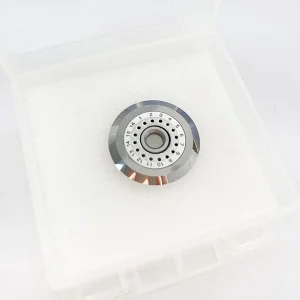
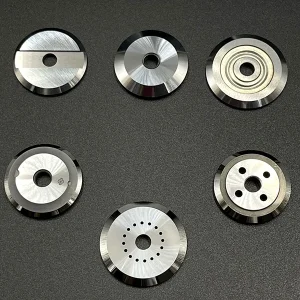
Cleavers range from simple to sophisticated. Basic scribe or “field” cleavers are inexpensive and used mainly for mechanical splices, where you press the blade to score and then bend to break. Precision cleavers are the workhorses for fusion splicing: they use a rotating diamond or carbide wheel, deliver highly repeatable cleaves — often thousands of cleaves before the blade needs rotating or replacing — and many automate the scoring and breaking into one step to eliminate human error. High-precision desktop cleavers can even cleave ribbon fiber, handling many fibers at once.
Single-Fiber vs Ribbon Cleavers
Beyond precision and angle, cleavers differ in how many fibers they handle at once. A single-fiber cleaver prepares one strand at a time and suits most field splicing, drop-cable work, and connectorization. A ribbon cleaver is designed to cleave a whole ribbon — commonly 12 fibers, sometimes up to 24 — simultaneously, which is essential for mass-fusion splicing in high-density backbone and data-center work where cleaving fibers one by one would be impractically slow. Choosing between them comes down to the cables you actually work with: single-fiber for individual drops and repairs, ribbon for high-count trunk cables. Some high-precision desktop cleavers handle both single and ribbon fibers and offer very high cleave counts before blade replacement, making them a practical choice for shops that see a mix of work. Matching the cleaver to your fiber count keeps preparation fast without sacrificing cleave quality.
Caring for Your Cleaver
A cleaver only produces good end faces if it is well maintained. Keep the blade clean and rotate or replace it at the recommended interval, since a dull or dirty blade causes angle deviations, chips, and nicks that raise splice loss. Handle the cleaver gently — it is a precision instrument that should not be subjected to impact. And always collect fiber shards in a proper container, because the offcuts are tiny, sharp, and can embed in skin.
Get the Right Fiber Cleaver
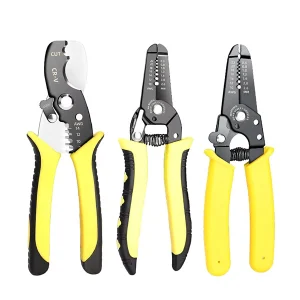
A quality cleaver pays for itself in fewer remade splices and lower loss. Aevumix supplies precision fiber cleavers, fiber strippers, fusion-splicing accessories, and the cleaning and inspection tools that complete a splicing kit. If you would like help choosing a cleaver for your fiber type and splicing work, contact our team.
FAQs
What Is a Fiber Cleaver Used For?
It is used to create a flat, perpendicular end face on an optical fiber in preparation for splicing or termination. That clean end face is essential for low-loss, low-reflectance joints between fibers.
Why Can’t I Just Cut Optical Fiber?
Cutting with scissors or wire cutters shears and shatters the glass, deforming the end face and causing high loss. Cleaving is a controlled break — scoring the surface and applying tension — which produces a smooth, flat end face that cutting cannot.
How Does a Fiber Cleaver Work?
It uses the scribe-and-tension method: the fiber is held under tension, a diamond or carbide blade scores a tiny crack, and increasing tension propagates the crack until the fiber breaks cleanly at about a 90-degree angle.
Does Cleave Quality Affect Splice Loss?
Yes, significantly. Much of the variation in splice loss comes from cleave quality. A poor cleave can defeat fiber alignment and cause bubbles at the joint, forcing the splice to be remade. Single-mode fiber is especially sensitive.
What Cleave Angle Is Needed for Fusion Splicing?
Fusion splicing needs a very flat cleave, typically around 1 degree or less. Mechanical splices tolerate below about 3 degrees, while APC terminations use an intentional angle of about 8 degrees to reduce back-reflection.