If you have ever chased a mysterious “network problem” only to discover the real culprit was a bad cable, you already understand why cable testers exist. But what does a cable tester do, exactly? This guide explains what a cable tester checks, the main types, how it works, and why it is one of the most valuable tools for anyone installing or maintaining wired networks.
What Is a Cable Tester?
A cable tester is a tool used to assess the functionality and integrity of network cables — Ethernet (Cat5e, Cat6, and so on), coaxial, and fiber optic. It confirms that a cable can carry a signal reliably by identifying physical defects, miswiring, and installation errors that would otherwise degrade performance. In short, it answers a simple but critical question: is this cable actually good?
A quick pass or fail from a tester can save hours of chasing software ghosts or misconfigured devices when the real fault is just a bad wire.
What Does a Cable Tester Actually Check?
A cable tester validates the physical-layer health of a cable. Its core jobs are:
- Continuity: confirms that each wire or fiber inside the cable forms a complete, unbroken path from end to end. If a conductor is severed, that is an “open” fault.
- Wiremap: verifies that every wire lands on the correct pin at both ends, with the pairs preserved. This is how it catches wiring errors.
- Fault detection: identifies shorts, opens, reversed pairs, crossed pairs, and split pairs — the common faults that cause intermittent problems.
- Length and distance to fault: on more advanced models, reports the overall cable length and how far along the run a fault sits.
- Performance readiness: on high-end models, measures signal quality, attenuation, and crosstalk to confirm the cable can support a target speed.
How a Cable Tester Works
At its simplest, a cable tester sends a low-voltage signal through each conductor in turn and reads which pin receives it at the far (remote) unit. If pin 1 on one end reaches pin 1 on the other end, that conductor is correctly wired. If no signal returns, the conductor is open. If the signal arrives on the wrong pin, the wires are crossed or reversed. Many testers display this as a graphical wiremap so you can see exactly how each wire is connected.
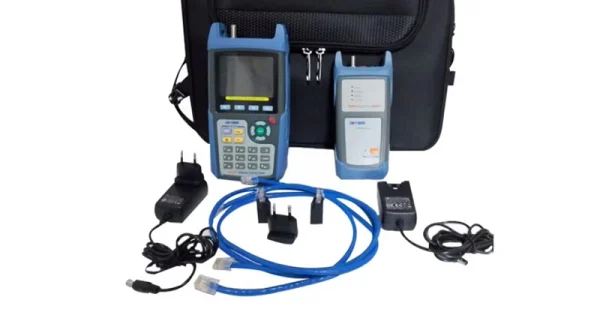
Most copper testers use a two-piece design: a main unit at one end and a remote unit at the other, so a single technician can test a full run alone.
Types of Cable Testers
| Type | What It Does | Best For |
| Continuity tester | Checks for a complete electrical path; finds breaks and shorts | Basic “is it intact?” checks |
| Wiremap tester | Verifies each wire lands on the correct pin (T568A/T568B) | Confirming correct termination |
| Qualification tester | Checks whether an existing link can support a target speed | Confirming readiness for Gigabit, VoIP, PoE |
| Certification tester | Measures crosstalk, insertion loss, return loss vs standards | Formal ISO/IEC or ANSI/TIA sign-off |
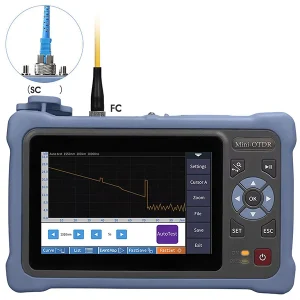
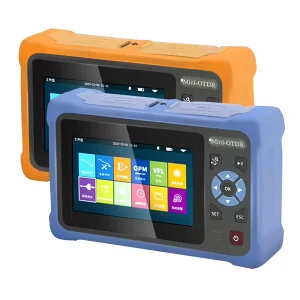
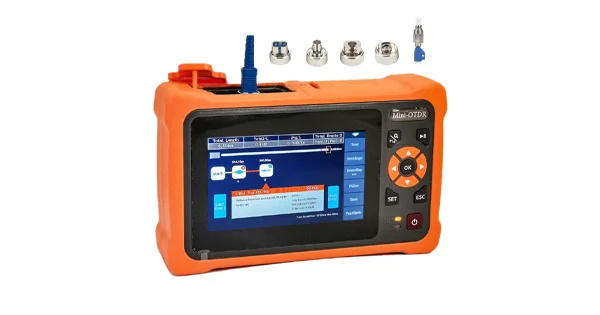
| TDR / OTDR tester | Locates the exact distance to a fault in copper or fiber | Pinpointing faults in long runs |
What a Basic Tester Does Not Do
It is important to know the limits. A wiremap or continuity tester gives a pass or fail on the physical wiring, but it does not measure bandwidth, signal quality, or power delivery. A cable can pass a wiremap test and still fail to support Gigabit Ethernet if the pairs are untwisted too far at the termination. For performance or formal sign-off, you need a qualification or certification tester.
Why Cable Testers Matter
Proving continuity and wiremap first prevents wasted time on switch, VLAN, or protocol troubleshooting. By catching opens, shorts, and miswires before they reach production, testers reduce downtime and improve reliability. For network administrators, installers, and IT professionals, a cable tester is simply an indispensable first line of defense against physical-layer faults.
Continuity vs Wiremap: A Key Distinction
Two of the most basic tester functions are often confused, but the difference matters. A continuity test simply asks whether each conductor forms a complete, unbroken electrical path from one end to the other — it catches breaks and shorts but says nothing about whether the wires are in the right order. A wiremap test goes further, confirming that each conductor lands on the correct pin at both ends with the twisted pairs preserved. This is why a cable can pass a crude continuity check yet still be miswired: all eight wires are connected, but two of them are swapped. For Ethernet, where pin order and pair integrity determine whether the link works at all, wiremap testing is the meaningful check, and continuity alone is rarely enough.
How to Choose a Cable Tester
Picking the right tester comes down to what you actually need to prove. If you only need to confirm a cable is wired correctly, a wiremap or continuity tester is inexpensive and fast. If you need to know whether an existing link will support Gigabit, VoIP, or Power over Ethernet, a qualification tester goes further by checking performance readiness. If you are handing a job over to a client and must document compliance, a certification tester measures crosstalk, insertion loss, and return loss against ISO/IEC or ANSI/TIA standards. And if you need to find exactly where a fault sits in a long run, a tester with TDR (copper) or an OTDR (fiber) reports the distance to the problem. Buying more capability than you need wastes money; buying less means a second trip. Match the tester to the outcome you have to deliver.
Where Cable Testers Fit in a Workflow
The most efficient technicians test at the right moments rather than only at the end. During installation, a quick wiremap check as each drop is terminated catches build errors while they are still easy to fix. Before configuring switches or chasing a reported “network problem,” a fast continuity and wiremap pass rules the cabling in or out. And during formal handover, certification testing produces the documented proof a client or standard requires. Treating the tester as a routine checkpoint, not a last resort, is what prevents small wiring faults from turning into hours of downstream troubleshooting.
Building a Practical Test Kit
A well-rounded technician rarely relies on a single tester. For copper work, a basic wiremap and continuity tester handles daily verification, while a qualification or certification tester is kept for jobs that must prove performance or meet a standard. A toner and probe helps trace and identify cables in a crowded closet, and a tester with distance-to-fault capability speeds up repairs on long runs. As networks add fiber, the kit expands to include optical tools. The goal is not to own every instrument but to cover the three things you will repeatedly need to prove: that a cable is wired correctly, that it performs to the required level, and where any fault lies. A kit organized around those outcomes keeps you ready for almost any job without carrying dead weight.
Cable Testers for Fiber Networks
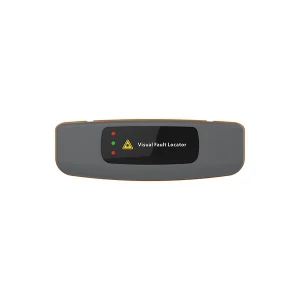
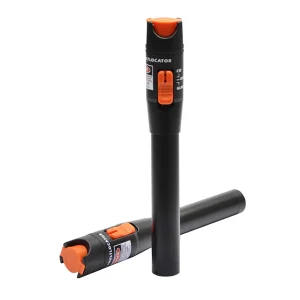
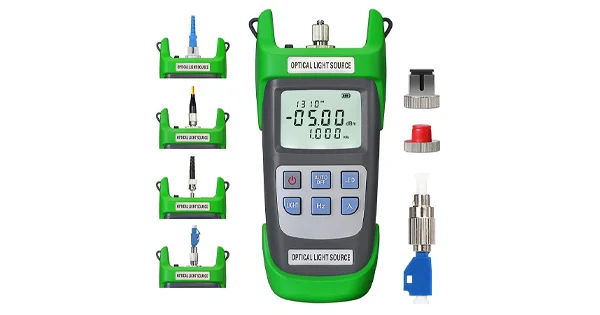
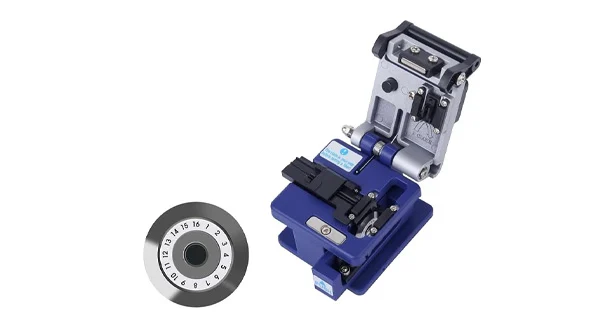
For fiber links, “cable testing” moves from electrical continuity to optical performance — using tools like optical power meters, light sources, OTDRs, and visual fault locators. Aevumix supplies a full range of optical communication test equipment for verifying, certifying, and troubleshooting fiber networks. If you would like help choosing the right testers for your cabling, contact our team.
FAQs
What Is the Main Purpose of a Cable Tester?
Its main purpose is to confirm that a cable can carry a signal reliably by checking continuity and wiremap and detecting faults such as opens, shorts, and reversed or crossed pairs before they cause network problems.
Can a Cable Tester Tell Me if My Cable Supports Gigabit?
A basic wiremap tester cannot — it only checks wiring. To confirm a cable supports Gigabit Ethernet or other speeds, you need a qualification tester, and for formal standards sign-off, a certification tester that measures crosstalk and insertion loss.
Should I Test a Cable While It Is Plugged Into a Switch?
No. For continuity and wiremap tests, disconnect the cable from all network equipment at both ends. Sending a tester’s signal into a live switch port can damage the port or the tester. Only performance-validation checks are done on live links.
Does a Cable Tester Work on Fiber Optic Cables?
Some do, but fiber testing uses different tools — optical power meters and light sources for loss, OTDRs for fault location, and visual fault locators for quick checks — because fiber carries light, not electrical current.
What Faults Can a Cable Tester Find?
Typical faults include opens (broken conductors), shorts, reversed pairs, crossed pairs, and split pairs. Advanced testers can also flag excessive length, crosstalk, and performance shortfalls.