Terminating cables — attaching connectors to the ends so they can plug into equipment — requires the right tools for the job. Whether you are working with copper Ethernet or fiber optic cable, this guide provides a cable termination tools list, explaining what each tool does and when you need it.
What Cable Termination Means
Cable termination is the process of attaching a connector to the end of a cable so it can connect to network devices, patch panels, or wall outlets. The tools differ significantly between copper and fiber: copper termination is mechanical (stripping, arranging, crimping, or punching down wires), while fiber termination involves precise glass preparation (stripping, cleaving, and either splicing or connectorizing). Below, both toolsets are covered.
Copper (Ethernet) Termination Tools
For terminating twisted-pair cables such as Cat5e and Cat6 with RJ45 connectors or keystone jacks, you will need:
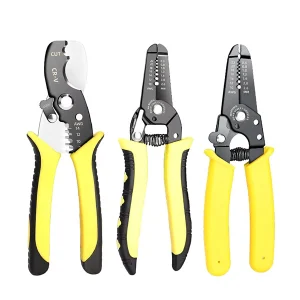
- Cable stripper: removes the outer jacket without nicking the internal wires, exposing the twisted pairs.
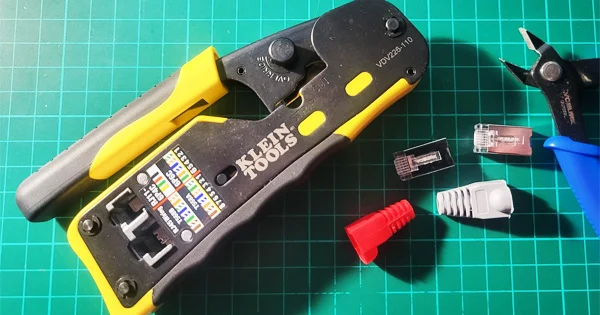
- Crimping tool: attaches an RJ45 plug to the cable, driving the pins through the wire insulation and securing the strain relief in one squeeze.
- Punch-down tool: terminates wires into keystone jacks, patch panels, and 110/66 blocks, seating each conductor and trimming the excess in one action.
- Wire cutters: trim conductors cleanly and evenly before insertion.
- Cable tester: verifies continuity and wiremap after termination — the essential final check.
- Toner and probe (optional): traces and identifies cables in a bundle or at a patch panel.
Fiber Optic Termination Tools
Fiber termination is precision work on glass, and it needs a dedicated toolset:
- Fiber stripper: removes the jacket, buffer, and coating to expose the bare glass without damaging it.
- Kevlar/aramid cutter: cuts the strength members inside the cable, which ordinary cutters struggle with.
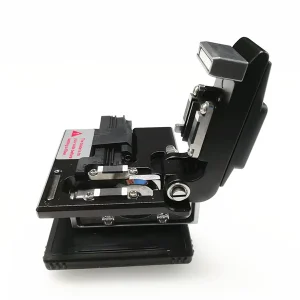
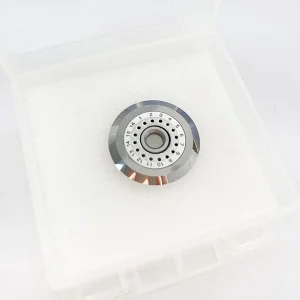
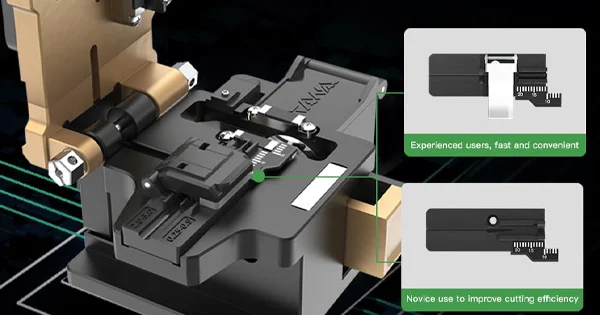
- Fiber cleaver: scores and breaks the bare fiber to create a flat, perpendicular end face — critical for low-loss splices and terminations.
- Fusion splicer: aligns and fuses two fibers with an electric arc for a permanent, low-loss joint (for splice-on connectors and splicing).
- Cleaning tools: lint-free wipes, fiber-grade fluid, and one-click cleaners to keep end faces contamination-free.
- Inspection scope or probe: verifies the end face and cleave quality before mating or splicing.
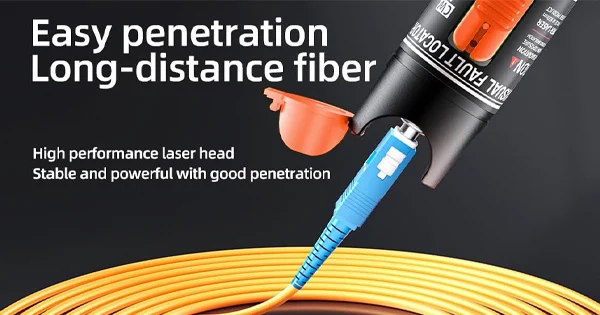
- Visual fault locator and power meter/OTDR: to test and verify the finished termination.
Termination Tools at a Glance
| Tool | Copper or Fiber | Purpose |
| Cable stripper | Copper | Remove jacket, expose twisted pairs |
| Crimping tool | Copper | Attach RJ45 plug |
| Punch-down tool | Copper | Terminate to jacks and patch panels |
| Fiber stripper | Fiber | Remove coating to bare glass |
| Fiber cleaver | Fiber | Create a flat, perpendicular end face |
| Fusion splicer | Fiber | Fuse fibers for permanent joints |
| Inspection scope | Fiber | Verify end face and cleave quality |
| Tester (cable / OTDR) | Both | Verify the finished termination |
Choosing Quality Over Price
With termination tools, quality has a direct effect on the finished result and on your costs over time. A cheap crimper that does not seat contacts fully produces intermittent connections; a low-grade fiber cleaver that drifts out of alignment produces angled end faces and failed splices that must be remade. Because a re-termination wastes a connector, your time, and sometimes a length of cable, the tool that seems expensive up front often proves cheaper per successful termination. Look for crimpers with a ratchet mechanism that guarantees a full crimp, strippers sized precisely for your cable so they do not nick conductors, and precision cleavers with a documented cleave-angle tolerance and a long blade life. Reliable tools also hold calibration and alignment longer, which keeps your results consistent across a whole job rather than degrading as the day goes on.
Don’t Forget Safety Gear
Fiber work in particular calls for safety equipment. Fiber shards are tiny, sharp, and dangerous to skin and eyes, so safety glasses and a fiber-scrap disposal container are essential. Keep the work area clean, never touch bare glass, and collect every fiber offcut. For copper, a tidy work surface and good wire cutters prevent most mistakes.
Organizing and Maintaining Your Tools
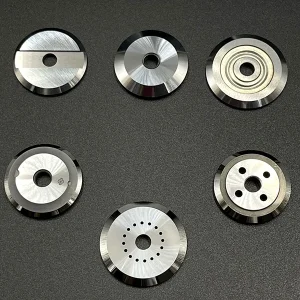
A termination kit works best when it is organized and maintained, not just assembled. Keep tools in a case with a place for each item so nothing is lost on site and consumables like connectors, sleeves, and wipes are easy to replenish. Fiber tools in particular reward maintenance: keep the cleaver blade clean and rotate or replace it on schedule, keep stripper blades sharp and correctly sized, and keep the fusion splicer’s V-grooves and electrodes clean, since debris there degrades every splice. For copper tools, check that crimpers still seat contacts fully and that strippers have not dulled to the point of nicking conductors. A quick end-of-day check — wipe down, restock consumables, note anything due for replacement — keeps the whole kit ready and prevents the frustration of discovering a worn or missing tool in the middle of a job.
Building Your Termination Kit
You do not always need every tool. A copper-only installer building patch cables needs a stripper, crimper, and tester; add a punch-down tool for jacks and panels. A fiber technician doing fusion splicing needs a stripper, cleaver, fusion splicer, cleaning tools, an inspection scope, and test gear. Match the kit to the work you actually do — the goal is to cover stripping, connecting/terminating, and verifying for whichever media you handle.
Testing Belongs in Every Termination Kit
It is worth stressing that a termination job is not finished until it is verified, which is why test tools belong in the kit alongside the crimpers and cleavers. For copper, a cable tester confirms continuity and a correct wiremap, catching the opens, shorts, and miswires that are invisible from the outside. For fiber, a visual fault locator provides a fast continuity and fault check, while a power meter with a light source measures the actual insertion loss and an OTDR locates and characterizes each event along the link. Skipping this step means putting cables into service on faith, and a single bad termination hidden in a bundle can take hours to find later. Building verification into the workflow — terminate, then immediately test and record the result — turns a kit from a set of assembly tools into a complete system for producing connections you can actually trust.
Get a Complete Termination Toolset
Reliable terminations depend on quality, purpose-built tools. Aevumix supplies both copper and fiber termination tools — crimping tools, strippers, punch-down tools, fiber cleavers, cleaning and inspection tools — along with the testers to verify your work. If you would like help assembling a termination kit for your projects, contact our team.
FAQs
What Tools Do I Need to Terminate an Ethernet Cable?
At minimum: a cable stripper, a crimping tool for RJ45 plugs, wire cutters, and a cable tester. Add a punch-down tool if you are terminating keystone jacks or patch panels.
What Tools Are Needed for Fiber Termination?
A fiber stripper, a Kevlar cutter, a fiber cleaver, cleaning tools, and an inspection scope — plus a fusion splicer for splice-on connectors or splicing, and a VFL or power meter/OTDR to verify the result.
What Is the Difference Between a Crimping Tool and a Punch-Down Tool?
A crimping tool attaches an RJ45 plug to a cable end. A punch-down tool seats individual wires into keystone jacks and patch panels, cutting the excess as it terminates each conductor.
Why Do I Need a Cleaver for Fiber but Not for Copper?
Because fiber is glass. A cleaver creates the flat, perpendicular end face needed for low-loss joints. Copper is terminated mechanically by crimping or punching down, which does not require cleaving.
Do I Need a Tester in My Termination Kit?
Yes. A cable tester (for copper) or a power meter, VFL, or OTDR (for fiber) verifies that the termination works before it goes into service. Testing is the essential final step of any termination job.