
From stripping to cleaving to crimping, this range let us standardize our termination kits across every crew. Quality is uniform and durable in daily use. Consolidating tool sourcing here simplified our whole operation.

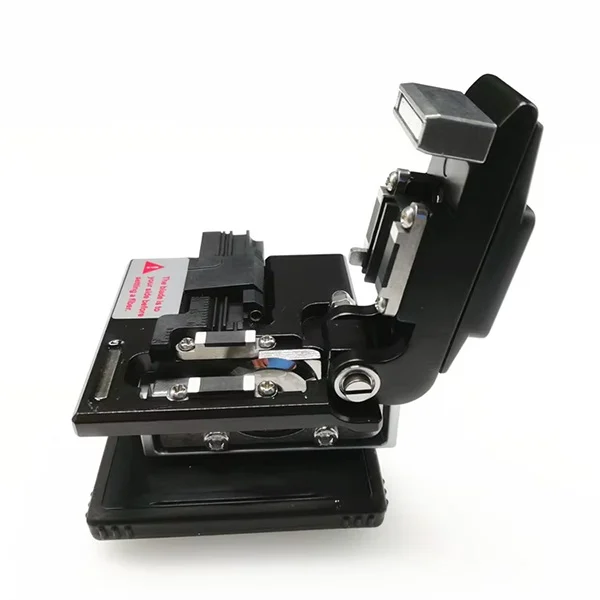
Angled fiber cleavers that produce APC-angle end-faces for low-reflectance splices and connectors. Request a quote.
An angled fiber cleaver produces a deliberately angled end-face — typically the 8-degree APC angle — instead of the flat cleave a standard cleaver makes. The angle matters where reflectance must be minimized: splicing to angled (APC) connectors and in reflection-sensitive links, an angled cleave keeps back reflection low so high-speed and analog signals stay clean. For APC work, only an angled cleaver produces the geometry the application requires.
Aevumix supplies angled fiber cleavers that deliver a consistent, repeatable cleave angle for low-reflectance splicing. Precise angle control and a hardened, multi-position blade give the coplanar angled end-face APC splices and pigtails need, and the tool is matched to the fibers and holders you work. Because reflectance faults degrade high-speed digital and RF-over-glass links, an accurate angled cleave is essential wherever return loss is specified.
Because the right cleaver depends on your fiber, angle requirement and volume, we help you specify the correct unit. Send your fiber types and application and we will recommend an angled fiber cleaver and provide a quote.
| Applicable Fiber | Single-fiber silica |
|---|---|
| Fiber Types | ?0.25 / ?0.9 / ?3.0 mm and 3.0 × 2.0 mm flat drop cable |
| Cladding Diameter | 125 μm |
| Cleave Length | 9 to 20 mm |
| Cleave Angle | ≤ 0.6° |
| Blade Life | 48,000 cleaves |
| Dimensions | 85 (W) × 75 (D) × 45 (H) mm |
| Weight | Approx. 140 g |
Based on 10 customer reviews
From stripping to cleaving to crimping, this range let us standardize our termination kits across every crew. Quality is uniform and durable in daily use. Consolidating tool sourcing here simplified our whole operation.

Cleave quality drives splice loss, so we test it closely. These cleavers hold well under one degree consistently, and blade life matches the spec sheet. Unit-to-unit consistency across shipments has been reliable.

A good cleave is the whole game for a low-loss splice, and this cleaver delivers a flat end face consistently. The blade indexing gives thousands of cleaves before I swap it. Offcut collection keeps the workspace tidy.
Tell us what you need and our team will get back to you with pricing and availability as soon as possible.
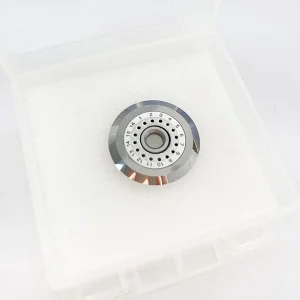
Replaceable cleaver blades that renew cleave quality — hardened, multi-position blades matched to common fiber cleavers. Request a quote.
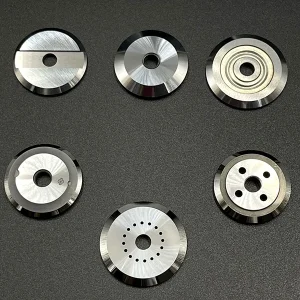
Precision fiber optic cleaver blades — hardened, high-cleave-count replacement blades that restore low-loss cleaving. Request a quote.
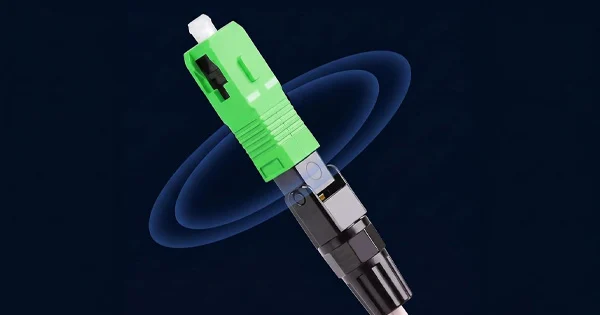
How to connect two fiber optic cables: fusion splicing, mechanical splicing, and connectors compared, with steps, trade-offs, and the strip-clean-cleave basics.
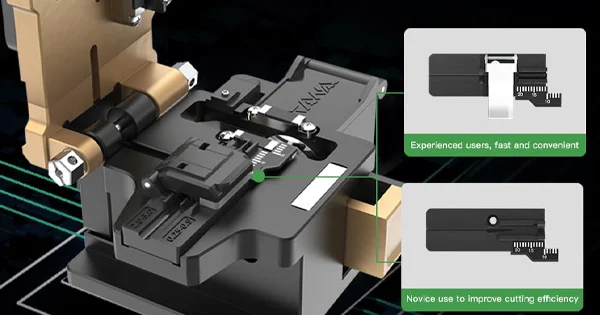
How to cut optical fiber cable properly: strip, clean, and cleave in sequence, the tools you need, safety, and the mistakes that ruin an end face.
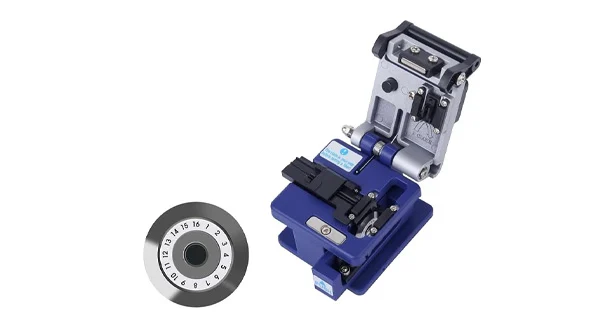
A fiber cleaver creates a flat, perpendicular end face on optical fiber for splicing and termination. Learn how it works, cleaving vs cutting, and why cleave quality matters.
To produce the angled end-face (typically 8° APC) that keeps back reflection low. It is required for splicing to APC connectors and in reflection-sensitive links where flat cleaves would reflect too much.
Typically the 8-degree APC angle, with precise, repeatable control. Confirm your required angle and we will specify the right cleaver.
In high-speed digital and analog/RF-over-glass links, where reflections cause bit errors or signal degradation. APC geometry and an accurate angled cleave keep return loss high.
We match angled cleavers to common fibers and holders. Send your fiber types and application for a recommendation.
Add a review