
We import fiber test instruments for resale, and Aevumix delivers the full range on schedule with complete certifications. Consistent quality across OTDRs, meters and locators means fewer supplier headaches. Dependable partner.

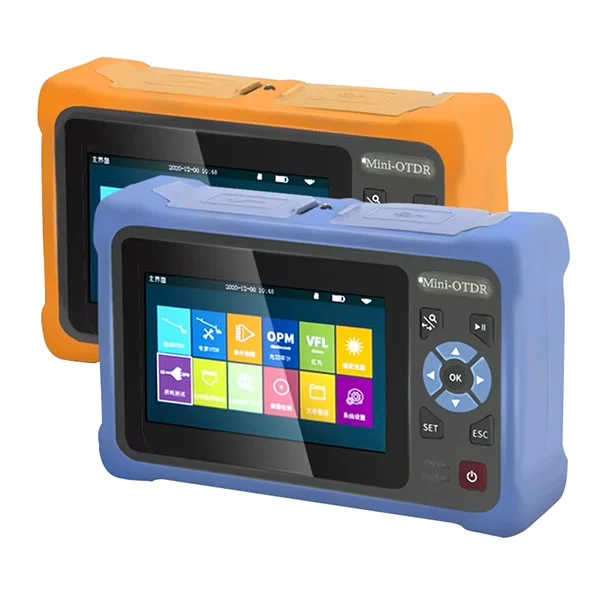
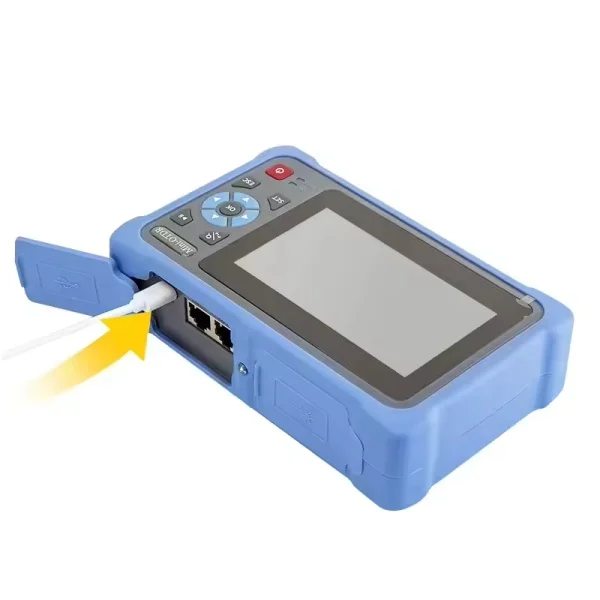
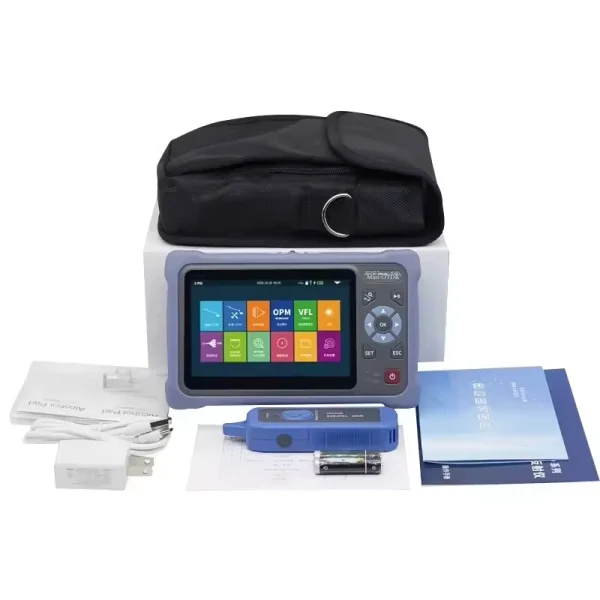
OTDR equipment for bidirectional testing that averages both directions to remove gainers and report true splice and link loss. Request a quote.
Bidirectional OTDR testing measures a link from both ends and averages the two traces, because a single-direction OTDR can misreport splice loss whenever two fibers with different backscatter coefficients are joined. That mismatch produces the familiar “gainer” — a splice that appears to add power from one direction and exaggerated loss from the other. Only the bidirectional average gives the true splice loss, which is why tier-2 certification and any dispute over a joint’s performance rely on it.
Aevumix supplies OTDR test equipment configured for efficient bidirectional measurement on single-mode and multimode fiber. Clear event mapping, manageable dead zones and multi-wavelength capability let a technician characterize every splice, connector and macrobend along the trace and resolve gainers into accurate figures. As OTDR test equipment built for real acceptance workflows, our units store and export bidirectional results for the documented certification that project sign-off requires.
Because the right OTDR depends on your link lengths, wavelengths, dead-zone and dynamic-range needs, we help you specify the correct instrument rather than over-buying range you will never use. Send your typical spans and fiber types and we will recommend an OTDR and provide a quote.
| wavelength | 1310nm/1550nm+/-20nm |
|---|---|
| Connector type | SC FC ST connector |
| Dynamic range | 26/24 decibels |
Based on 10 customer reviews
We import fiber test instruments for resale, and Aevumix delivers the full range on schedule with complete certifications. Consistent quality across OTDRs, meters and locators means fewer supplier headaches. Dependable partner.

Aevumix combined meter, OTDR, locator and probe into a single field test set for our crews. One case, everything certified. It streamlined our field kit and the instruments have proven accurate and durable in daily use.

As a distributor we needed OTDR testers under our own brand. The OEM housing and firmware customization is genuine, MOQs are realistic for a first run, and customers keep coming back. The margins work for us.
Tell us what you need and our team will get back to you with pricing and availability as soon as possible.
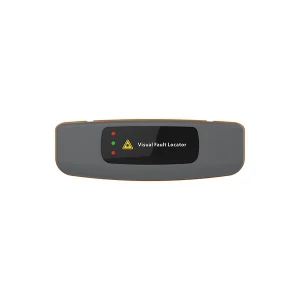
Fiber optic fault detectors that quickly locate breaks, bends and connection faults by making them visible. Request a quote.
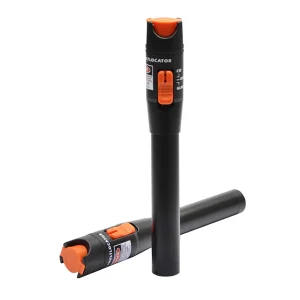
Cable fault locators that pinpoint breaks and faults in fiber cable — visible-light and reflectometer options for every distance. Request a quote.
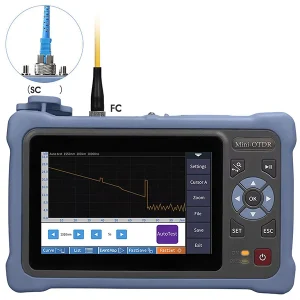
Time domain reflectometer (OTDR) cable fault locators that return distance-to-fault and event detail along the whole span. Request a quote.
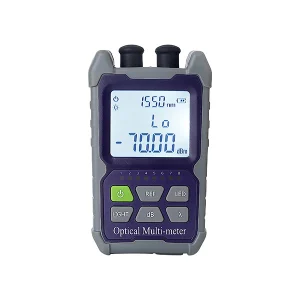
Mini OTDR testers — pocket-sized reflectometers that map events, loss and reflectance on access and short links. Request a quote.
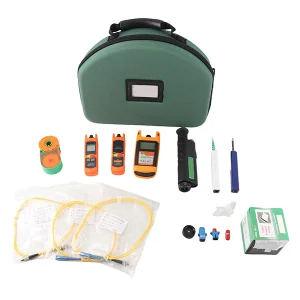
Multi-fiber pro power meters and complete fiber test kits for efficient loss testing across many fibers and connectors. Request a quote.
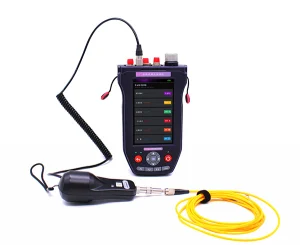
Optical return loss meters that measure reflectance and ORL to catch the back-reflection faults that degrade high-speed and analog links. Request a quote.
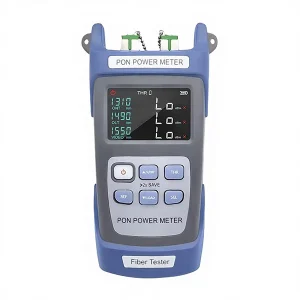
PON power meters that measure live upstream and downstream power on active FTTH networks in-line without disrupting service. Request a quote.
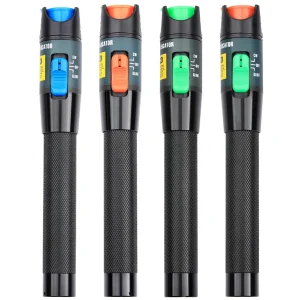
High-power visual fault locators that push visible red light farther — longer-range fault location and continuity on longer spans. Request a quote.
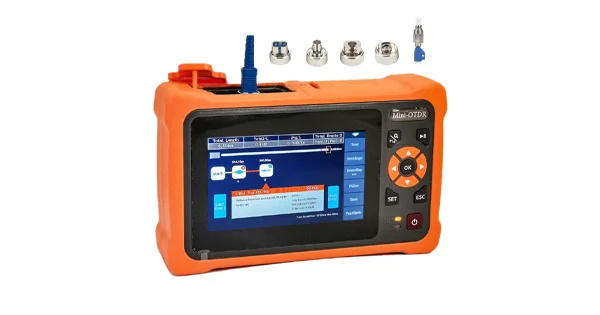
How an OTDR works: it sends a laser pulse and measures returning light. Rayleigh scattering reveals attenuation; Fresnel reflection locates events. Learn the working principle.
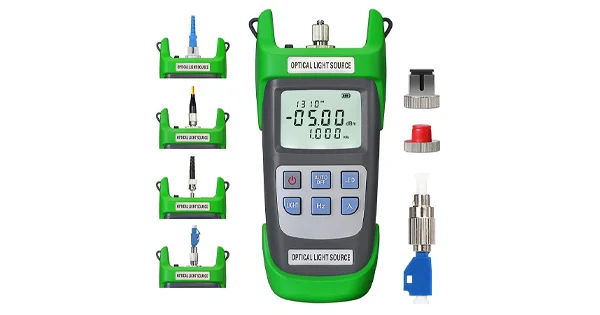
A PON power meter tests live PON links inline, reading upstream and downstream wavelengths at once; an optical power meter measures one wavelength on dark fiber. Learn when to use each.
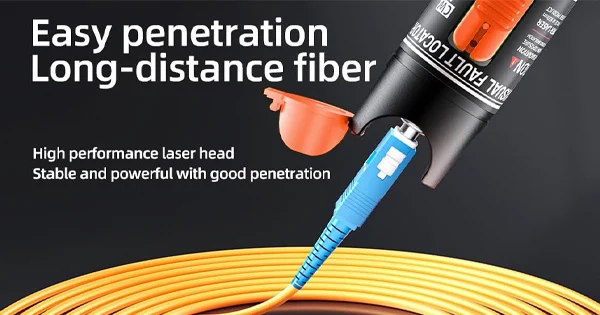
How to use a visual fault locator: connect the fiber, turn on the red laser, and find breaks, bends, and bad connectors by the light escaping. Plus VFL safety and range.
It is testing a fiber from both ends and averaging the traces. Because joined fibers can have different backscatter coefficients, a one-way OTDR can over- or under-report a splice, even showing an apparent “gainer.” The bidirectional average cancels this and reports the true loss.
A gainer is a splice that appears to add power when viewed from one direction, caused by the second fiber backscattering more light than the first. It is a measurement artifact, not real gain — bidirectional averaging reveals the actual splice loss.
Tier-2 (OTDR-based) certification and many project specifications require bidirectional results for accurate, defensible splice-loss figures. Our OTDRs store and export these for documentation. Tell us your standard and we will confirm the configuration.
Match dynamic range to your longest span and dead zone to how closely spaced your events are — short dead zones matter for patch panels and short links. Send us your span lengths and topology and we will specify the right unit.
Add a review