
We import fiber test instruments for resale, and Aevumix delivers the full range on schedule with complete certifications. Consistent quality across OTDRs, meters and locators means fewer supplier headaches. Dependable partner.

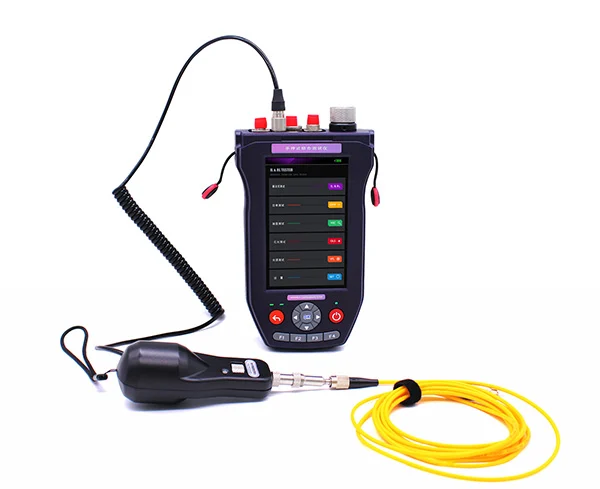
Optical return loss meters that measure reflectance and ORL to catch the back-reflection faults that degrade high-speed and analog links. Request a quote.
An optical return loss meter measures how much light a link reflects back toward the source — the optical return loss (ORL) — which insertion loss alone never reveals. A connector can pass a loss test yet reflect enough light to disrupt a transmitter: high-speed digital links suffer increased bit errors, and analog and RF-over-glass services degrade visibly. Measuring reflectance and ORL is therefore essential wherever return-path performance matters, from data-center interconnects to CATV and DOCSIS return.
Aevumix supplies optical return loss meters for single-mode and multimode measurement, often alongside insertion loss in one instrument so a technician characterizes both loss and reflectance in a single connection. Accurate ORL measurement helps distinguish a clean fusion splice from a reflective mechanical joint, verify that APC (angled) connectors are delivering their expected low reflectance, and confirm that a suspect end-face is contaminated rather than damaged. Used with the inspect-clean-inspect workflow, an ORL meter closes the loop between what an inspection scope shows and how the connection actually performs.
Because the right return loss meter depends on your wavelengths, connector types and whether you need combined loss-and-ORL measurement, we help you specify the correct instrument. Send your network details and connector mix and we will recommend an optical return loss meter and provide a quote.
| Magnification | 200X |
|---|---|
| Video Format | PAL |
| Power Consumption | 3 W |
| Display | 5″ TFT |
| Display Resolution | 800 × 480 px |
| Data Storage | USB flash drive supported |
| Adapter Interface | Interchangeable adapters: FC, SC, ST, universal 2.5 mm, universal 1.25 mm |
| Focus | Manual |
| Power Input | 5 V / 2 A via USB Type-C |
| Battery | 4 × 18650 lithium-polymer cells |
| Battery Life | > 8 h |
| Operating Temperature | -10 to 50 °C |
| Storage Temperature | -20 to 50 °C |
| End-Face Inspection | Built-in and external probes, one-touch switching |
Based on 5 customer reviews
We import fiber test instruments for resale, and Aevumix delivers the full range on schedule with complete certifications. Consistent quality across OTDRs, meters and locators means fewer supplier headaches. Dependable partner.

Aevumix combined meter, OTDR, locator and probe into a single field test set for our crews. One case, everything certified. It streamlined our field kit and the instruments have proven accurate and durable in daily use.

Offering a full private-label test line — OTDR, meter, VFL, PON — let us serve installers and operators from one catalogue. The OEM customization is genuine and reorders are dependable. It has strengthened our position with customers.
Tell us what you need and our team will get back to you with pricing and availability as soon as possible.
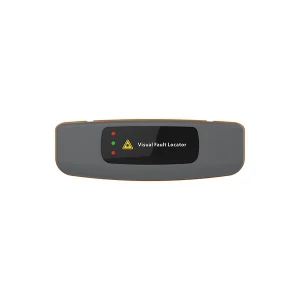
Fiber optic fault detectors that quickly locate breaks, bends and connection faults by making them visible. Request a quote.
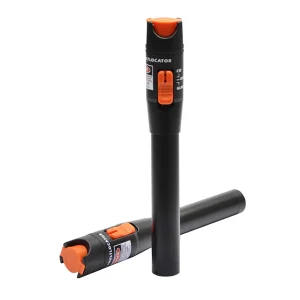
Cable fault locators that pinpoint breaks and faults in fiber cable — visible-light and reflectometer options for every distance. Request a quote.
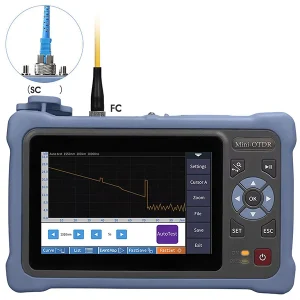
Time domain reflectometer (OTDR) cable fault locators that return distance-to-fault and event detail along the whole span. Request a quote.
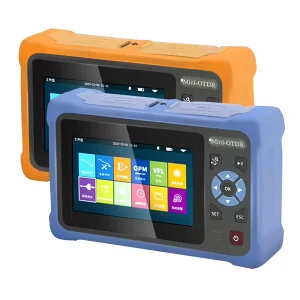
OTDR equipment for bidirectional testing that averages both directions to remove gainers and report true splice and link loss. Request a quote.
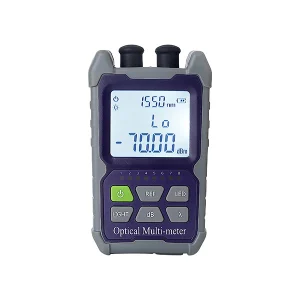
Mini OTDR testers — pocket-sized reflectometers that map events, loss and reflectance on access and short links. Request a quote.
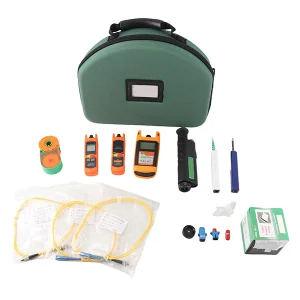
Multi-fiber pro power meters and complete fiber test kits for efficient loss testing across many fibers and connectors. Request a quote.
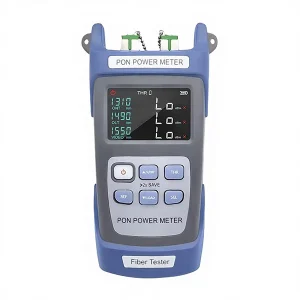
PON power meters that measure live upstream and downstream power on active FTTH networks in-line without disrupting service. Request a quote.
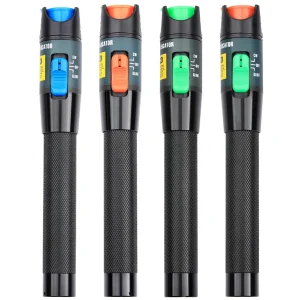
High-power visual fault locators that push visible red light farther — longer-range fault location and continuity on longer spans. Request a quote.
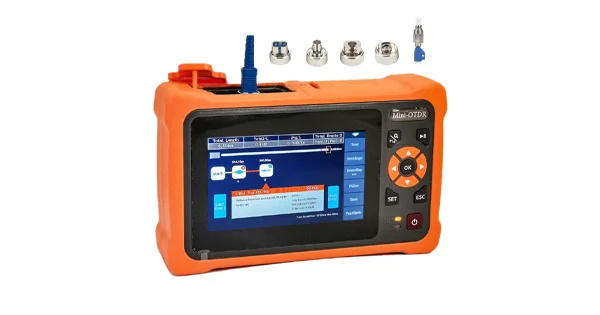
How an OTDR works: it sends a laser pulse and measures returning light. Rayleigh scattering reveals attenuation; Fresnel reflection locates events. Learn the working principle.
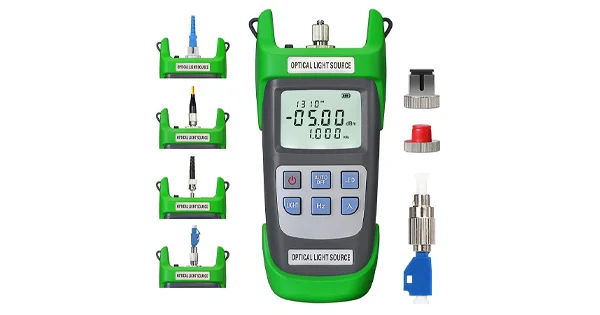
A PON power meter tests live PON links inline, reading upstream and downstream wavelengths at once; an optical power meter measures one wavelength on dark fiber. Learn when to use each.
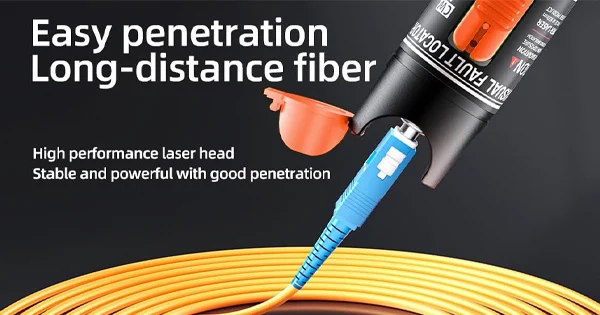
How to use a visual fault locator: connect the fiber, turn on the red laser, and find breaks, bends, and bad connectors by the light escaping. Plus VFL safety and range.
It measures optical return loss (ORL) — the ratio of reflected light returning toward the source relative to the launched light. High ORL (little reflection) is good; low ORL means strong reflections that can disrupt transmitters and degrade high-speed and analog links.
Insertion loss tells you how much light reaches the far end, but not how much reflects back. A connection can pass a loss test yet reflect enough to cause bit errors or analog degradation. ORL measurement catches these back-reflection faults.
Yes. Angled (APC) connectors are specified for very low reflectance, and an ORL meter verifies they are performing as intended — useful when diagnosing a link that fails despite acceptable insertion loss.
Yes. We supply meters that measure insertion loss and ORL together, so a technician characterizes both in a single connection. Tell us your wavelengths and connectors and we will recommend the right model.
Add a review