Fiber Optic Equipment
PON Power Meter
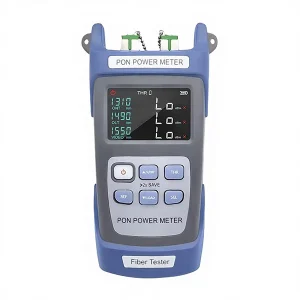
PON power meters that measure live upstream and downstream power on active FTTH networks in-line without disrupting service. Request a quote.

Testing a live PON is a different discipline from testing a dark fiber. The network is carrying subscribers, several wavelengths share the same glass, and a splitter sits between the office and the home — so a general power meter simply cannot read it correctly. A PON tester is purpose-built for exactly this: it measures the separate upstream and downstream wavelengths of a working FTTH network, in-line, without knocking anyone offline. As a PON tester manufacturer and supplier, Aevumix builds these instruments for the FTTH crews who turn up and maintain PON every day.
The line covers pass-through PON power meters and PON-capable test sets, configured for GPON, EPON, and next-generation PON wavelength plans, and open to OEM and ODM supply.
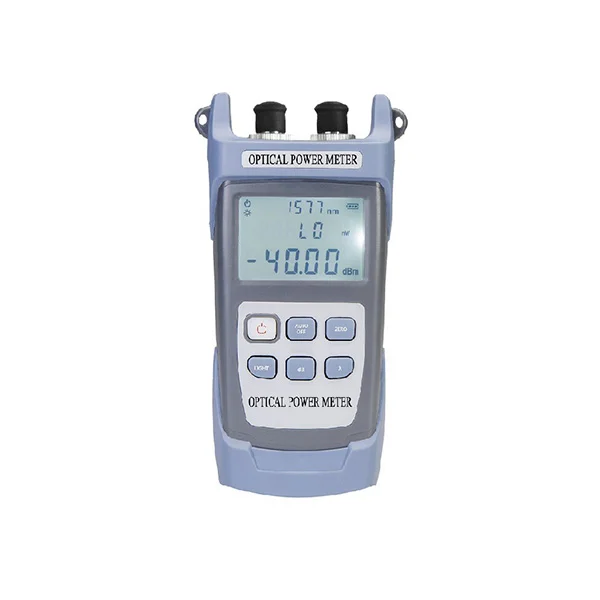
PON power meters that measure live upstream and downstream power on active FTTH networks in-line without disrupting service. Request a quote.
Explore related categories across industry, application, and performance attributes.
 OTDR Tester Handheld, mini and smart OTDR testers that map every splice, connector, bend and break along a fiber by location and loss. Available for single mode, multimode and PON networks, with clear trace analysis and standard .sor reporting for fault location and link certification.
  Optical Power Meter Calibrated optical power meters that measure link loss for fiber acceptance testing. Traceable accuracy across 850 to 1625nm, with PON-wavelength options for live networks. Available standalone or paired with a light source as a complete optical loss test set for two-ended certification.
 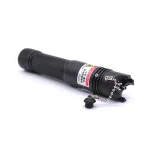 Visual Fault Locator Visual fault locator that flood a fiber with bright red laser light so breaks, tight bends and bad connectors glow visibly. The fastest way to locate a gross fault or verify continuity, working inside the OTDR dead zone, with 2.5mm, LC and MPO options and steady or pulsed output.
 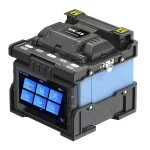 Fiber Fusion Splicer Fusion splicers that permanently join two fibers with a low-loss fused joint. Core-alignment models for backbone and long-haul (around 0.02 dB) and cladding-alignment models for cost-effective FTTH (around 0.05 dB), with fast cycle times and rugged, field-ready build.
 Why PON Needs Its Own Tester
A passive optical network stacks several services onto one fiber by wavelength-division multiplexing — traditionally 1310 nm upstream from the subscriber, 1490 nm downstream to it, and often 1550 nm for overlaid video — and splits one feed among many homes through a passive splitter. That architecture breaks the assumptions a general power meter makes. Point an ordinary meter at a live PON and it lumps every wavelength together into a meaningless total; it has no way to tell the upstream burst from the downstream carrier, or video from data.
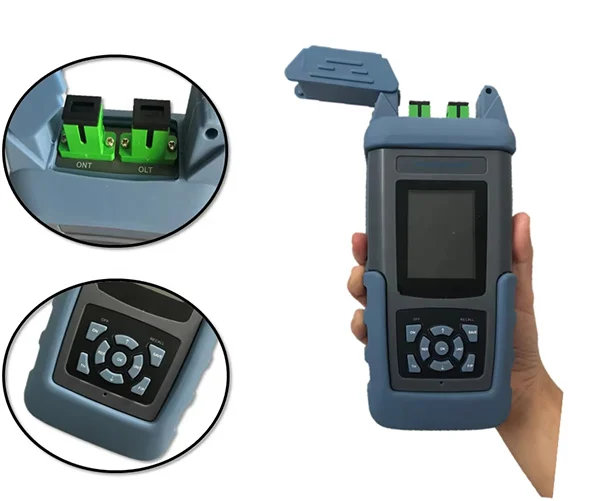
A PON tester is built around that reality. It sits in-line, pass-through, between the OLT side and the ONT, and reads each wavelength on its own calibrated channel at the same time — so a technician sees downstream power, upstream power, and video level as distinct, correct numbers while the subscriber stays connected. Selection comes down to the wavelength plan you support: classic GPON and EPON, or the newer plans of 10G-PON and beyond, which add wavelengths a legacy tester cannot see. Match the tester to the PON generation your customers deploy, and live-network turn-up and troubleshooting become a plug-in-and-read operation.
OEM / ODM Programs
A PON tester is defined by the wavelengths it resolves, so we configure the wavelength channels and calibration to the PON standards your customers run — GPON and EPON as standard, with 10G-PON and next-generation plans where your market is upgrading. Pass-through connector interfaces are matched to their drop and feeder plant.
Branding runs through the instrument. Housing, boot logo, firmware, and on-screen readouts carry your identity; pass/fail thresholds and report export follow your acceptance format; and packaging and cases ship as yours. It is a private-label PON test line built to the network generation your customers deploy, delivered at a workable MOQ, with samples so you can verify live-network readings on your own plant before committing.
Need a Custom PON Tester?
Tell us the PON standards — GPON, EPON, 10G-PON — and the wavelengths your customers deploy. We will match them to a PON tester built for their network and your brand.
NDA available · ISO-aligned production · English & technical support
Six dimensions define a PON-tester build. Use them as your OEM brief.
Simultaneous, separately calibrated reading of 1310, 1490, and 1550 nm — the core of correct PON measurement.
GPON and EPON as standard; 10G-PON and next-generation plans where the network is upgrading. The tester must see every wavelength in use.
In-line measurement that reads a live network without dropping the subscriber — the defining PON-tester capability.
Calibrated range spanning strong downstream carriers and bursty upstream signals, read correctly on each channel.
Configurable thresholds turn raw power into an instant pass/fail for fast field decisions.
Logging and report export document live-network acceptance in your branded format.
Share the PON standards and wavelengths your customers deploy; we confirm the tester configuration.
We set wavelength channels, thresholds, and firmware, then align OEM housing and packaging to your brand.
Samples let you verify live-network readings on your own plant before volume.
Stable manufacturing with consistent QC, flexible MOQs, and global logistics for ongoing supply.
Separately calibrated channels give true downstream, upstream, and video power on a working network — where a general meter only guesses.
Wavelengths, firmware, housing, and reporting all ship under your brand — a private-label PON test line, not a re-badged unit.
Configurable for GPON, EPON, and 10G-PON, so the instrument matches the network your customers are building now.
A real engineer, usually within a business day, for distributors in 40+ countries.
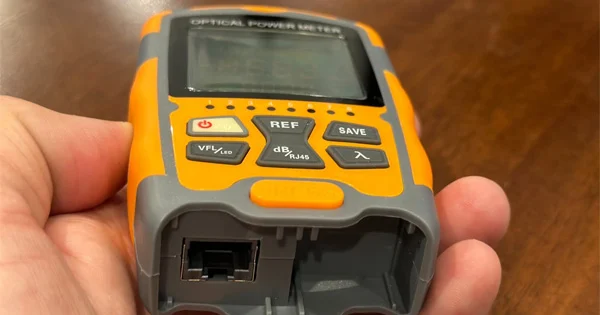
How an optical power meter works: a photodiode converts light to current proportional to optical power. Learn about wavelength calibration, detectors, and referencing.
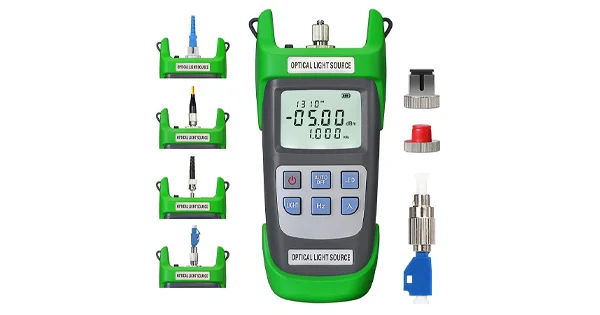
A PON power meter tests live PON links inline, reading upstream and downstream wavelengths at once; an optical power meter measures one wavelength on dark fiber. Learn when to use each.
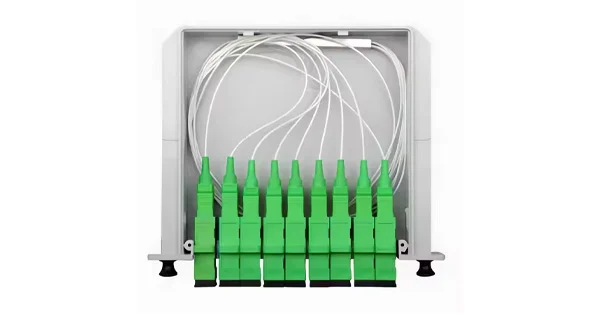
PON means Passive Optical Network. Learn how PON works, what PON on a router means, GPON vs XGS-PON, and where the technology is heading.
Because a live PON carries several wavelengths on one fiber. A general meter sums them into a meaningless total; it cannot separate downstream from upstream or video. A PON tester reads each wavelength on its own calibrated channel.
The tester connects in-line between the network and the ONT and measures without interrupting service, so the subscriber stays connected while a technician reads the link. It is the defining feature of a PON tester.
Classic GPON/EPON uses 1310 nm upstream, 1490 nm downstream, and often 1550 nm for video. Next-generation plans like 10G-PON add further wavelengths, which the tester must be configured to see.
It depends on configuration. We build testers to the PON generations your customers deploy; where they are upgrading, we include the newer wavelength plans so one instrument spans the transition.
Yes. Configurable thresholds turn measured power on each wavelength into an immediate pass/fail, so field crews make turn-up and troubleshooting decisions on the spot.
Yes. Logging and report export capture live-network acceptance in your branded format, for records and customer sign-off.
Fully. Wavelength channels, firmware, housing, thresholds, and packaging all carry your brand, at low MOQs suited to launching a PON test line.
Tell us about your application and we will respond with material recommendations, sample options, and pricing as soon as possible.