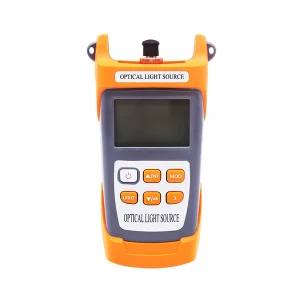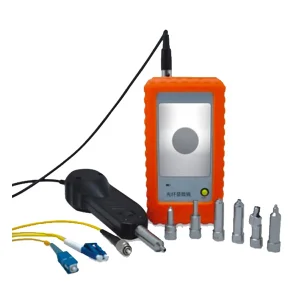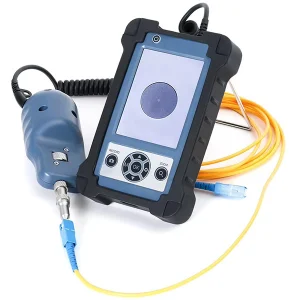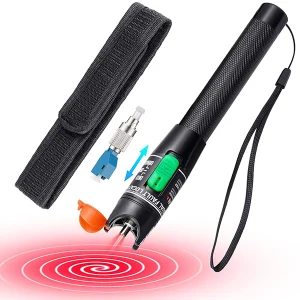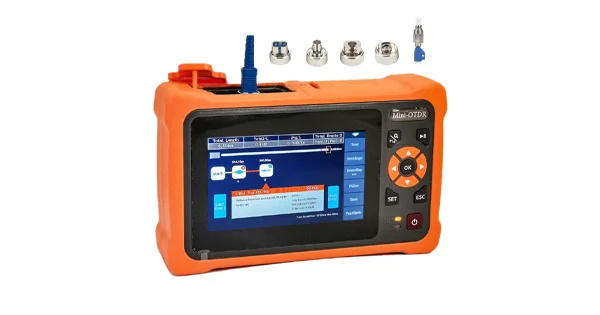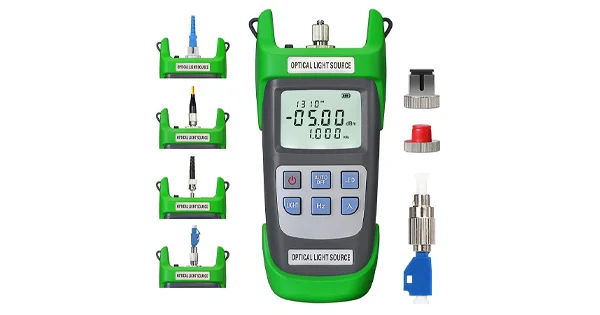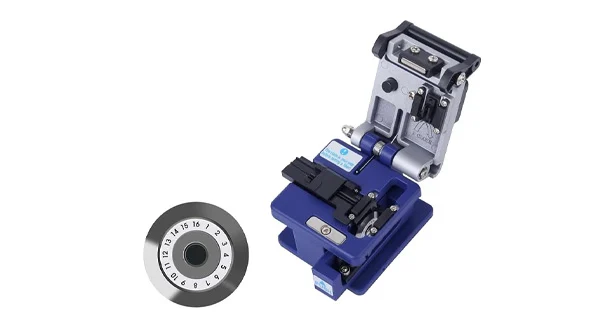
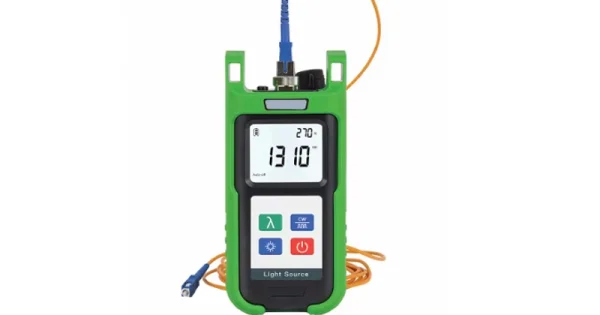
In fiber optic communication and testing, the “source” of the fiber is the light source — the device that launches optical energy into the fiber so a signal can travel down it or a link can be tested. If you have ever wondered what the source of fiber is and why it matters so much, this guide explains the concept, the main types of fiber light sources, the wavelengths they use, and how they fit into fiber testing.
What Is a Fiber Light Source?
A fiber optic light source is a fundamental tool in fiber optic communication and testing. It generates a stable, known optical output at one or more specific wavelengths and couples that light into a fiber. In a live network, the source is the transmitter (a laser or LED inside the equipment). In a test setup, a dedicated handheld or bench light source injects a controlled optical signal so a technician can measure how the fiber and its connectors perform.
The key word is controlled. A useful source produces a consistent output with minimal fluctuation, because any drift in the launched power directly corrupts the measurement at the other end.
The Two Main Types: LED vs Laser
Fiber light sources fall into two broad families, chosen according to the fiber type and distance.
LED Sources
LED (light-emitting diode) sources are used for short-distance, multimode applications. They emit over a broader spectral range and couple well into the larger core of multimode fiber. LEDs are typically used at 850 nm and 1300 nm.
Laser Sources
Laser sources — commonly Fabry-Perot (FP) or distributed-feedback (DFB) laser diodes — are used for long-distance, single-mode transmission where higher precision and tighter spectral output are required. Lasers are typically used at 1310 nm and 1550 nm, with 1625 nm often added for testing outside the active signal band.
| Source Type | Fiber Type | Typical Wavelengths | Best For |
| LED | Multimode | 850 nm, 1300 nm | Short-distance links, data centers, LANs |
| Laser (FP / DFB) | Single-mode | 1310 nm, 1550 nm (and 1625 nm) | Long-distance, FTTx, telecom, CATV |
Why Wavelength Matters
Fiber attenuation and behavior change with wavelength, so a source must match the fiber and the network it serves. Multimode fiber is characterized at 850 nm and 1300 nm; single-mode fiber at 1310 nm and 1550 nm, the two dominant telecom windows. The 1625 nm and 1650 nm wavelengths sit outside the normal signal bands and are used for in-service testing on live networks. Because loss from bends and certain defects differs by wavelength, testing at more than one wavelength gives a fuller picture of a link’s health.
What “Stabilized” Means and Why It’s Essential
You will often see the term stabilized light source. Stabilization means the output power is held steady over time, often aided by a built-in optical isolator. This matters because any fluctuation in the launched power during a test translates directly into an inaccurate reading on the power meter at the far end. A high-stability source ensures the loss measurement reflects the true performance of the cable, not variations coming from the test equipment itself. Quality sources hold their output within tiny margins and meet the requirements of TIA/EIA and ISO test standards.
How the Source Fits Into Fiber Testing
On its own, a light source injects light but cannot measure loss. Paired with an optical power meter at the opposite end, it forms an Optical Loss Test Set (OLTS). The source launches a known power at a chosen wavelength; the power meter measures how much arrives; the difference is the end-to-end insertion loss of the link. This source-and-meter pairing is the standard method for certifying that a fiber link meets its loss budget.
Many sources also offer modulation tones — commonly 270 Hz, 1 kHz, and 2 kHz — which allow a compatible power meter or fiber identifier to recognize the wavelength and confirm which fiber is being tested.
Key Features of a Good Fiber Light Source
- Correct wavelengths for your fiber type (multimode vs single-mode).
- High output stability for repeatable, accurate loss measurements.
- Interchangeable adapters (SC, FC, ST, LC) to match your patch panels and cables.
- Modulation modes (CW plus 270 Hz / 1 kHz / 2 kHz) for fiber identification.
- Rugged, portable design with long battery life for field use.
Key Specifications to Check
When comparing light sources, a handful of specifications tell you whether an instrument fits your work. Output stability, often quoted as a small dB figure per hour, shows how steady the source stays during a test — the smaller, the better for repeatable loss readings. The wavelength set confirms it covers your fiber type. Output power indicates how much optical energy it launches, which affects the dynamic range you can measure over longer links. The available modulation tones matter if you rely on fiber identification with a matched meter. Battery life and ruggedness determine how it holds up in the field. And calibration interval — many quality sources need recalibration only every few years — affects the cost of ownership. Reading these specs against your actual network prevents surprises later.
Common Light Source Problems and Fixes
Even a good source gives poor results if a few basics are overlooked. Recognizing the usual culprits saves time in the field. Unstable or drifting readings almost always trace back to a source that has not been allowed to stabilize before measuring — let it settle first. A loss value that seems far too high often means the source and power meter are set to different wavelengths, or a dirty launch connector is corrupting the signal, so match wavelengths and clean before connecting. Erratic results between multimode and single-mode tests usually mean the wrong emitter type is being used for the fiber. And if a source will not couple light cleanly, check that the correct adapter is fitted and that the port connector is inspected and clean. In short, most “source problems” are really setup problems, and they are quick to resolve once you know where to look.
Where Fiber Light Sources Are Used
A light source is one of the most essential tools for anyone installing or maintaining optical fiber networks, and it appears across many settings:
- FTTx and access networks: verifying loss on the drops and feeders that deliver fiber to homes and businesses.
- Data centers: certifying the many short multimode links between switches and servers at 850 nm and 1300 nm.
- Long-haul and metro telecom: characterizing single-mode backbone spans at 1310 nm and 1550 nm.
- CATV and broadband: confirming that distribution links meet their loss budgets.
- Manufacturing and QA: testing patch cords and assemblies for insertion loss before they ship.
In every case the job is the same: launch a known, stable optical signal so the fiber’s real performance can be measured against a target.
How to Choose the Right Light Source
Selecting a source comes down to a few practical questions. What fiber type are you testing — multimode, single-mode, or both? That decides LED versus laser and the wavelengths you need. Which connectors are on your network, so you can match adapters (SC, FC, ST, LC)? Do you need field portability with long battery life, or a bench unit for a lab? And will you pair it with a specific power meter, in which case matching modulation tones for fiber identification is worth checking. Answering these first prevents buying a source that cannot test the fiber in front of you. When in doubt, a dual-wavelength single-mode laser source (1310/1550 nm) or a combined LED/laser unit covers the widest range of common work.
Explore Aevumix Fiber Light Sources
Choosing the right source starts with your fiber type, wavelengths, and connectors. Aevumix supplies a full range of optical communication test equipment, including stabilized LED and laser light sources, optical power meters, and complete OLTS kits for multimode and single-mode networks. If you would like help selecting a light source for your fiber and test requirements, contact our team and we will point you to the right solution.
FAQs
What Is the Source of Light in a Fiber Optic System?
The source is the device that launches optical energy into the fiber — a laser or LED. In a live network it is the transmitter inside the equipment; in testing it is a dedicated light source that injects a known signal so loss and performance can be measured.
What Is the Difference Between an LED and a Laser Source?
LED sources are used for short-distance multimode fiber at 850 nm and 1300 nm, emitting over a broader spectrum. Laser sources are used for long-distance single-mode fiber at 1310 nm and 1550 nm, offering higher precision and tighter output.
Can a Light Source Measure Fiber Loss by Itself?
No. A light source only injects light. To measure loss you pair it with an optical power meter at the other end, forming an Optical Loss Test Set (OLTS) that measures total end-to-end insertion loss.
Why Does a Fiber Light Source Need to Be Stabilized?
Because any drift in the launched power during a test corrupts the reading on the power meter. A stabilized source holds its output steady so the loss measurement reflects the real performance of the cable, not fluctuations from the equipment.
Do I Need Different Sources for Multimode and Single-Mode Fiber?
Usually yes. Multimode sources use LEDs at 850 nm and 1300 nm, while single-mode sources use laser diodes at 1310 nm and 1550 nm. Some advanced units combine all four wavelengths, but separate sources are common.